Modern & Luxury Powder Room Ideas

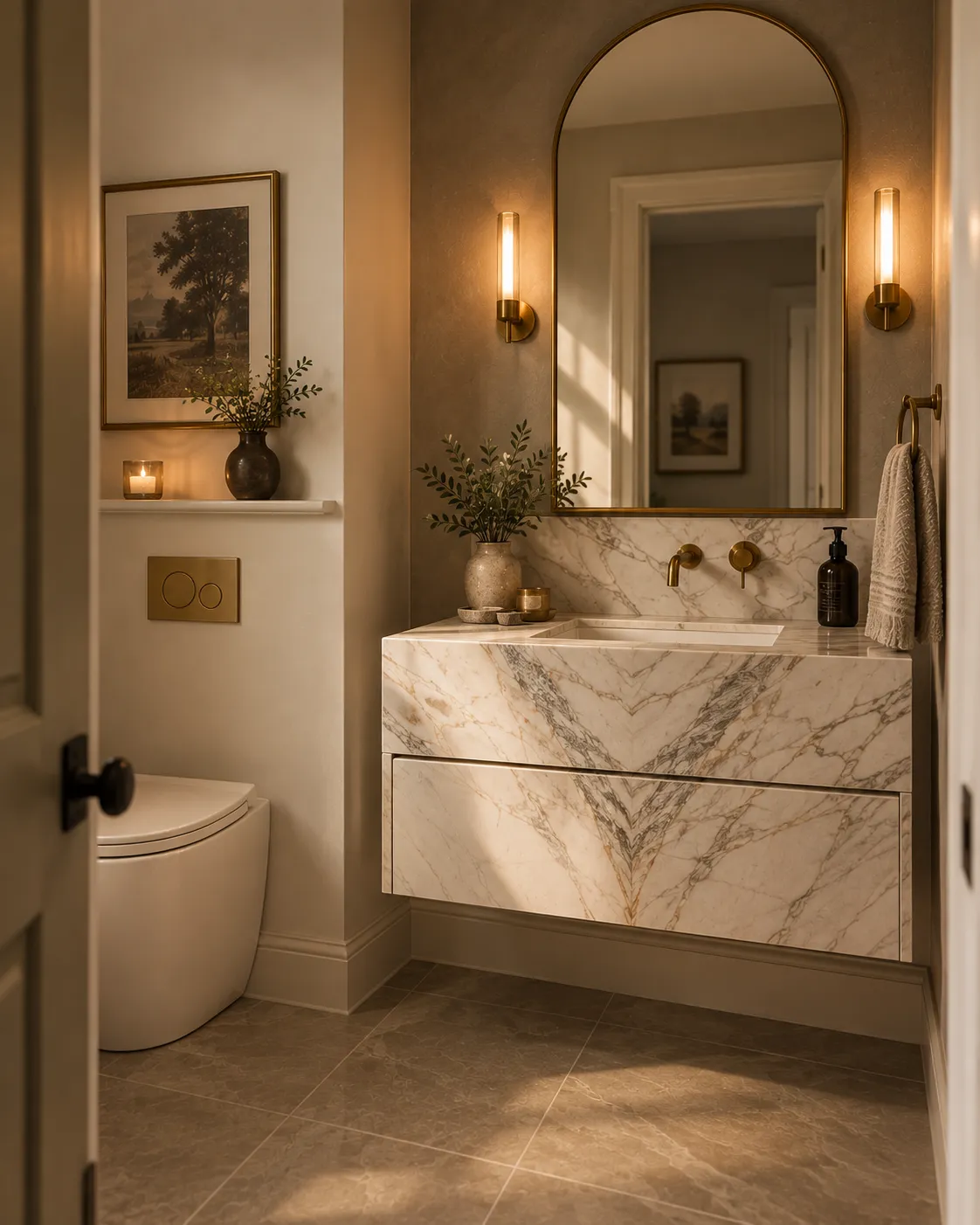
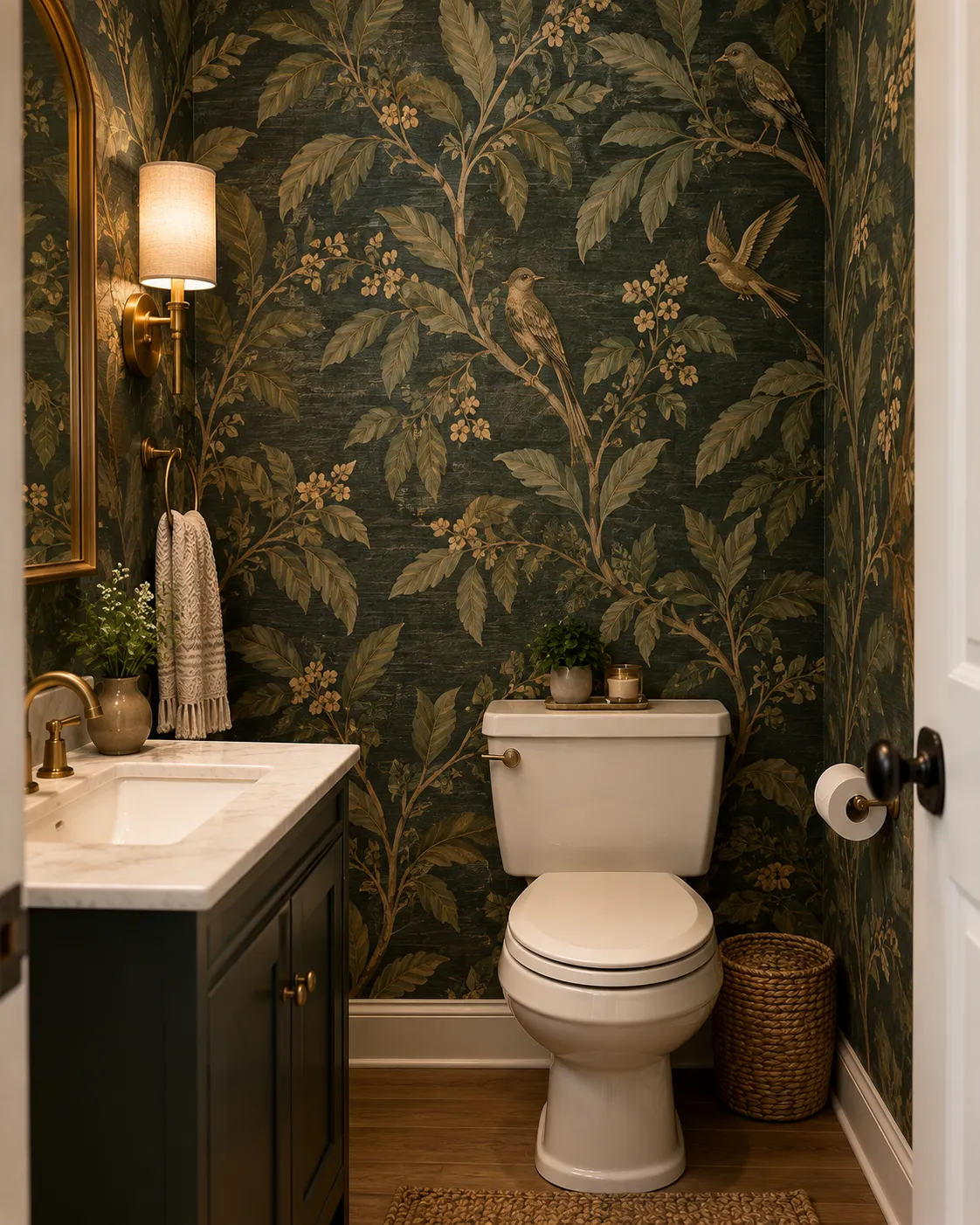
I’m not going to pretend I’ve done an unlimited-budget powder room — I haven’t, and this site isn’t built on that kind of project. What I have done is spend real money on one thing (grasscloth wallpaper, during my 2018 gut) while keeping everything else in the room modest, which is honestly how most “luxury” powder rooms actually get built, budget included.
The one-splurge approach
A powder room’s small footprint is exactly why it’s the cheapest room in the house to be genuinely extravagant in — you’re buying so little material that even an expensive choice stays affordable in total dollars. Real grasscloth, a genuine stone vanity top, or a designer wallpaper pattern are all fair game here in a way they wouldn’t be in a full bathroom. Pick one thing to actually splurge on, and let everything else be more modest.
What luxury materials actually cost you in upkeep
This is the part most inspiration content skips entirely. Real marble is porous and will etch or stain from ordinary soap and cosmetics unless it’s sealed and you’re careful — genuinely worth knowing before you commit, not after. Real grasscloth is harder to keep clean near a sink than vinyl is. None of this means skip these materials; it means go in with real expectations instead of assuming “luxury” also means “maintenance-free.”
Getting the look for less
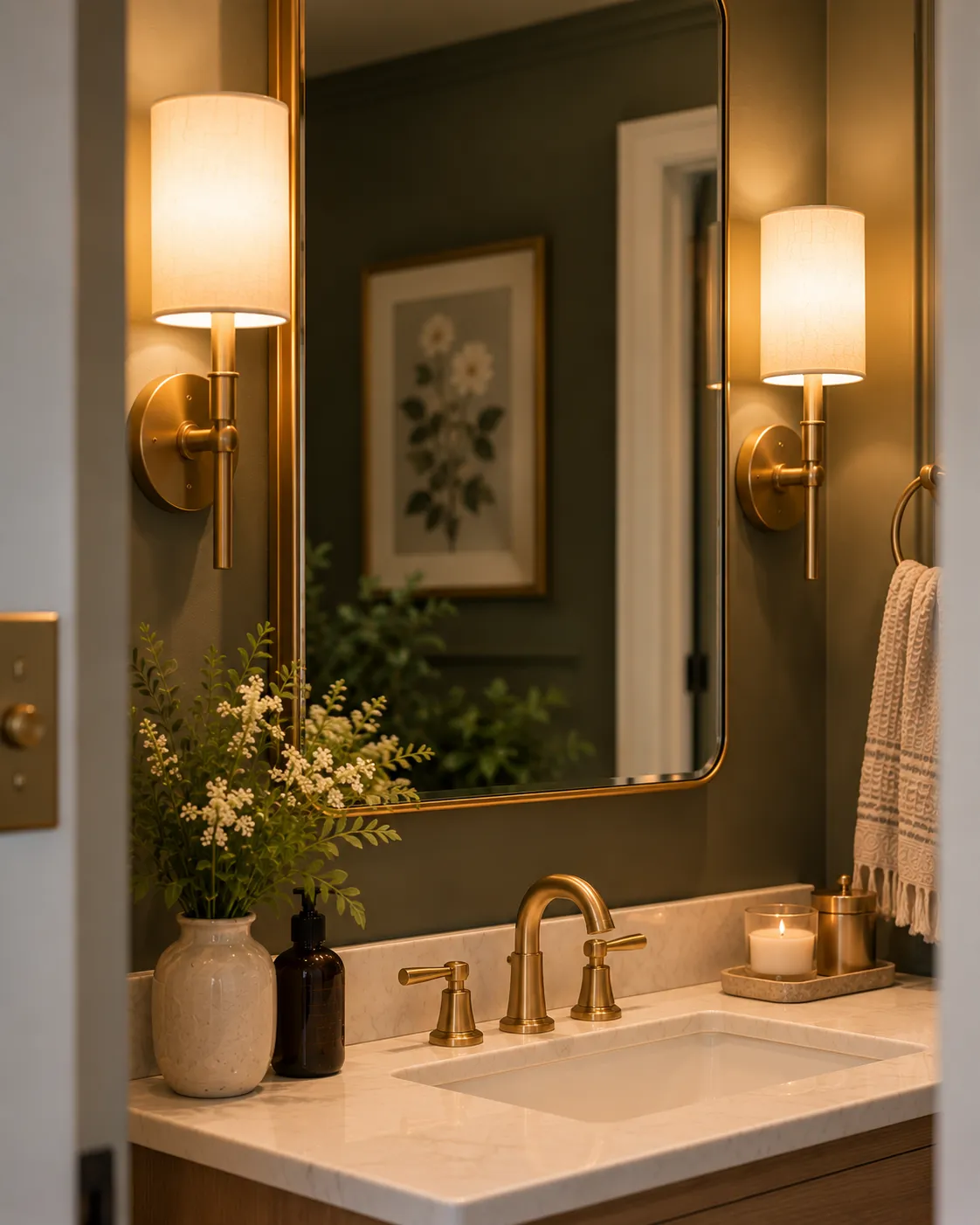
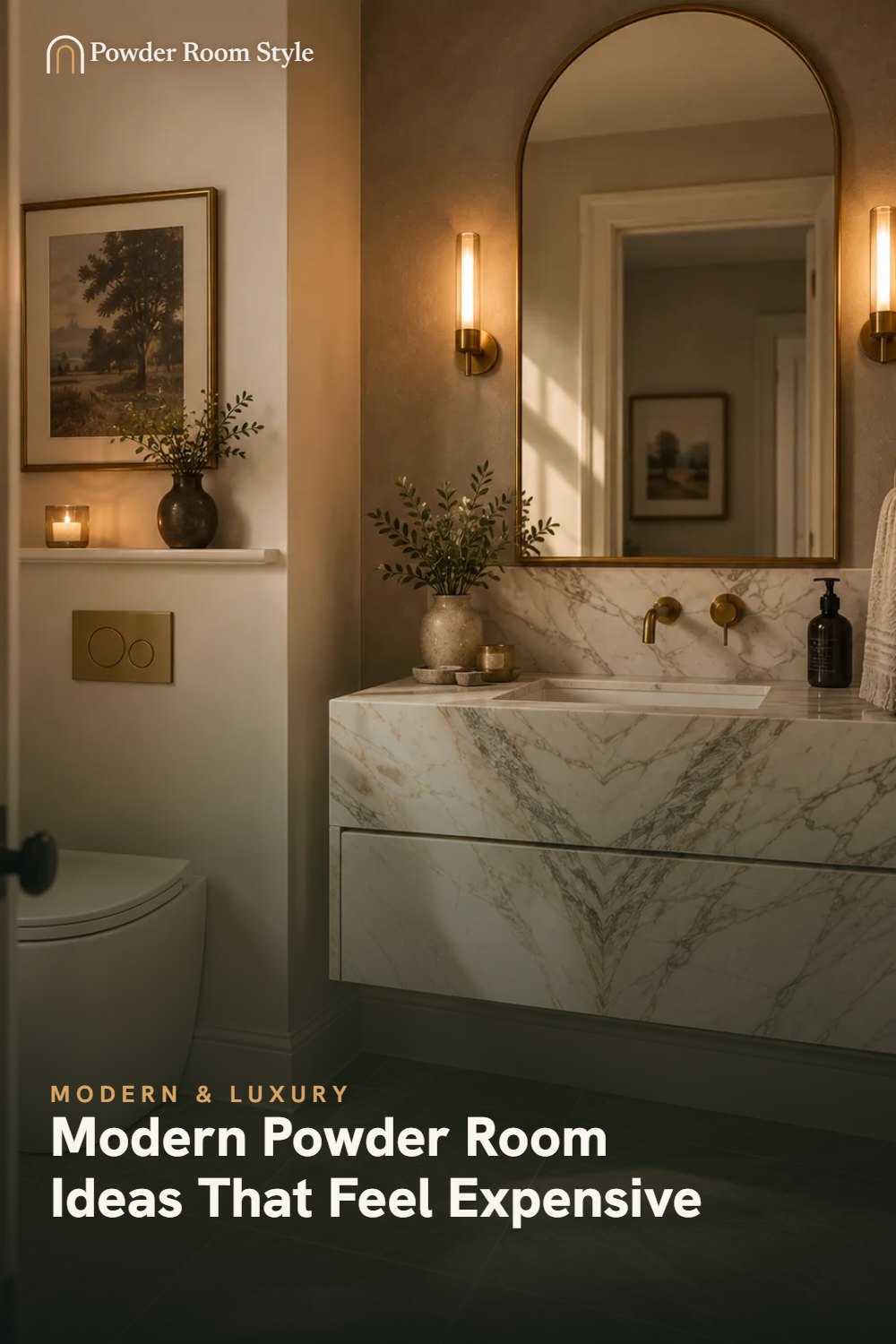
If the full-price version doesn’t fit your budget, the honest substitutes get you most of the visual effect: an engineered-stone vanity top instead of real marble, a brass-finish (not solid brass) faucet, a faux-grasscloth-look vinyl instead of real grasscloth. I go through the specific real-vs-faux trade-offs, including real prices, in the tile guide and the wallpaper guide.
What actually reads as “modern”
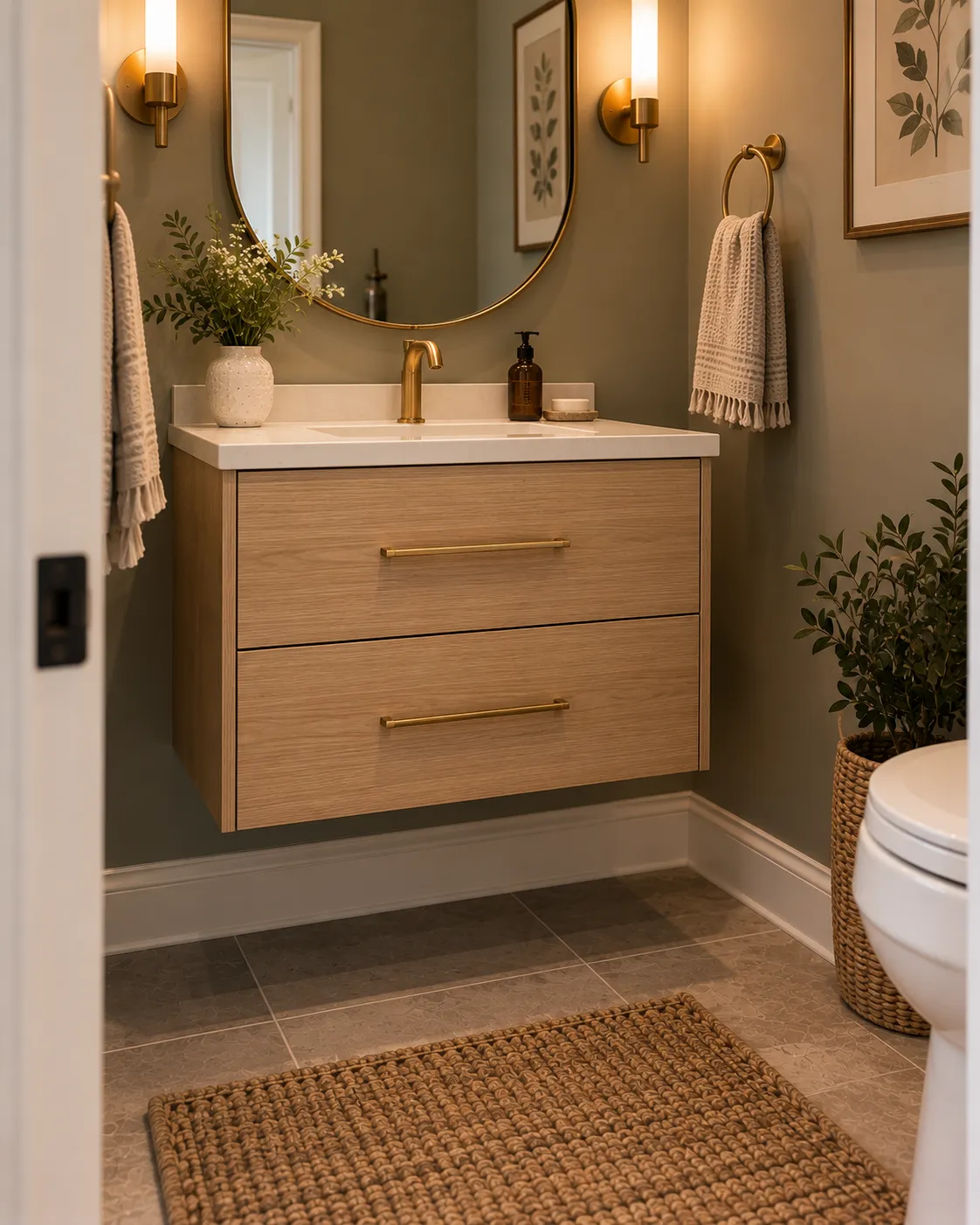
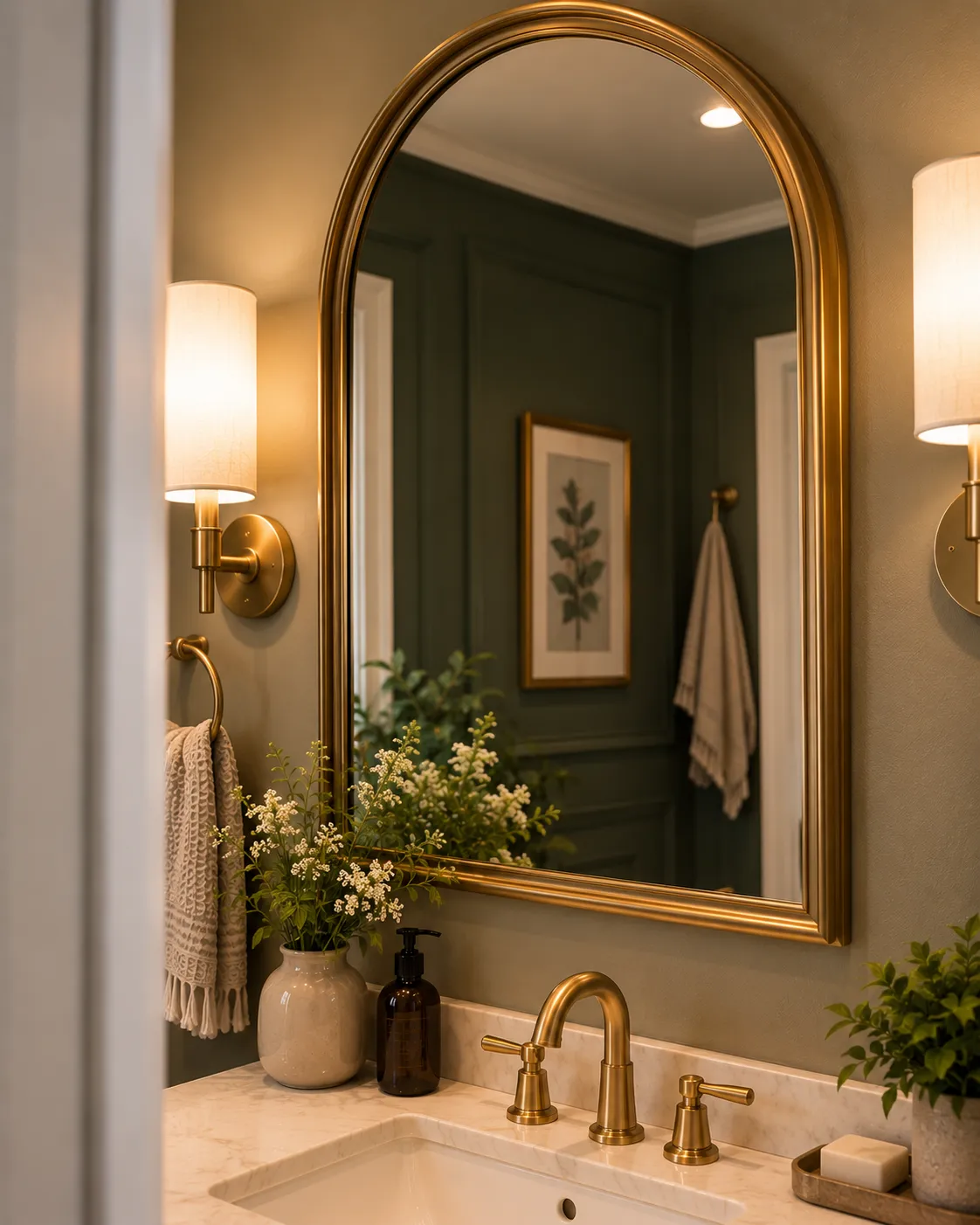
More than any specific material, it’s restraint: one consistent metal finish throughout the room, clean simple lines on the vanity and mirror, and exactly one statement element rather than several competing for attention. A bold wallpaper AND a dramatic light fixture AND a patterned floor is a lot of decisions all shouting at once — pick the one you actually want guests to notice.
Common questions
Is a luxury powder room worth the cost if it's such a small room?
This is exactly the room where I think it's worth it — you're buying so little material that a genuine splurge stays affordable in total dollars, even if the per-square-foot cost is high. I did this myself with real grasscloth wallpaper in my 2018 gut, which I wouldn't have justified in a full bathroom.
Does real marble need special care in a powder room?
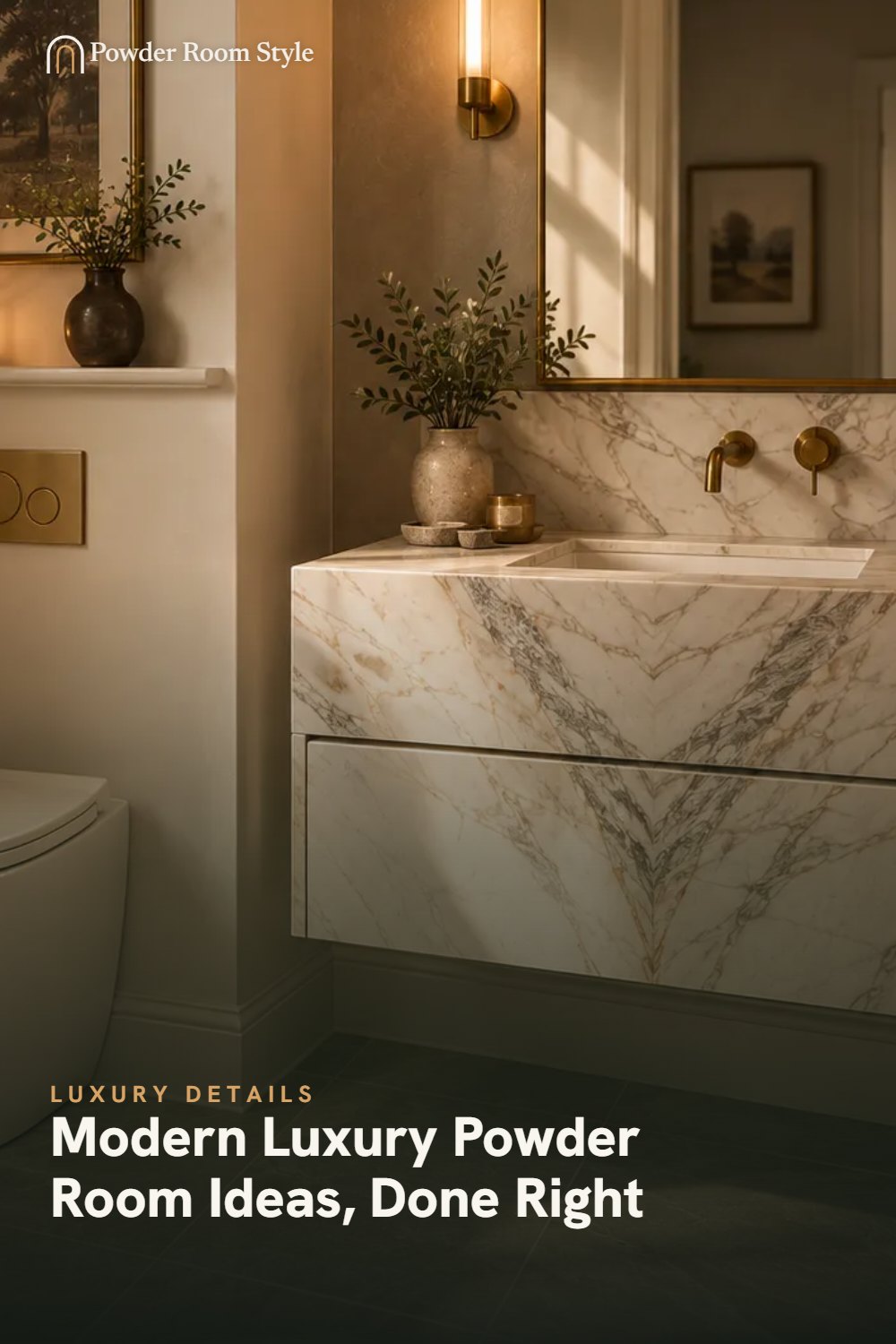
Yes, more than people expect. Real marble is porous and will etch or stain from ordinary soap and toiletries over time unless it's sealed and you're careful about what sits on it. It's a genuine maintenance commitment, not a set-and-forget surface — worth knowing before you commit to it, not after.
How do I get a luxury look without the luxury budget?
Engineered stone instead of real marble, a brass-finish faucet instead of solid brass, and a faux-grasscloth vinyl instead of the real material all get you most of the visual effect for a fraction of the cost. I go through the honest real-vs-faux trade-offs for specific materials in the tile and wallpaper guides.
What makes a powder room read as "modern" specifically?
Clean lines, one consistent metal finish throughout (not a mix of brass and chrome and black), and restraint — modern luxury is more about what you leave out than what you add. A floating vanity, a simple mirror shape, and one statement element (wallpaper or a light fixture, not both competing) is the formula I'd default to.
Is it OK to mix budget and luxury pieces in the same powder room?
Yes, and I think it's actually the smarter approach — put your money into the one element that gets the most attention (usually wallpaper or the vanity) and keep everything else more modest. Guests notice the anchor choice, not whether every single fixture matches in price point.