Moody, Dark & Bold Powder Room Ideas

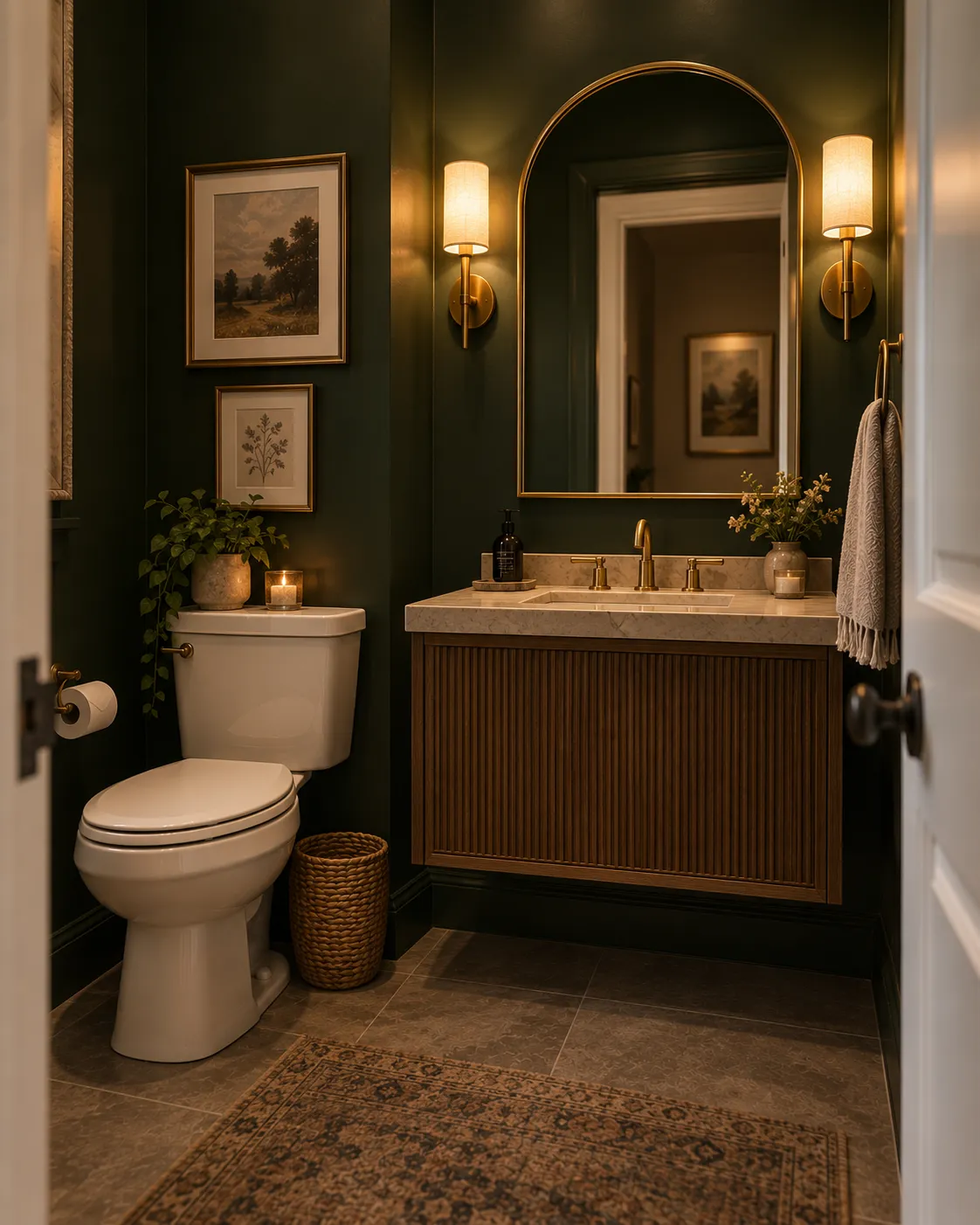
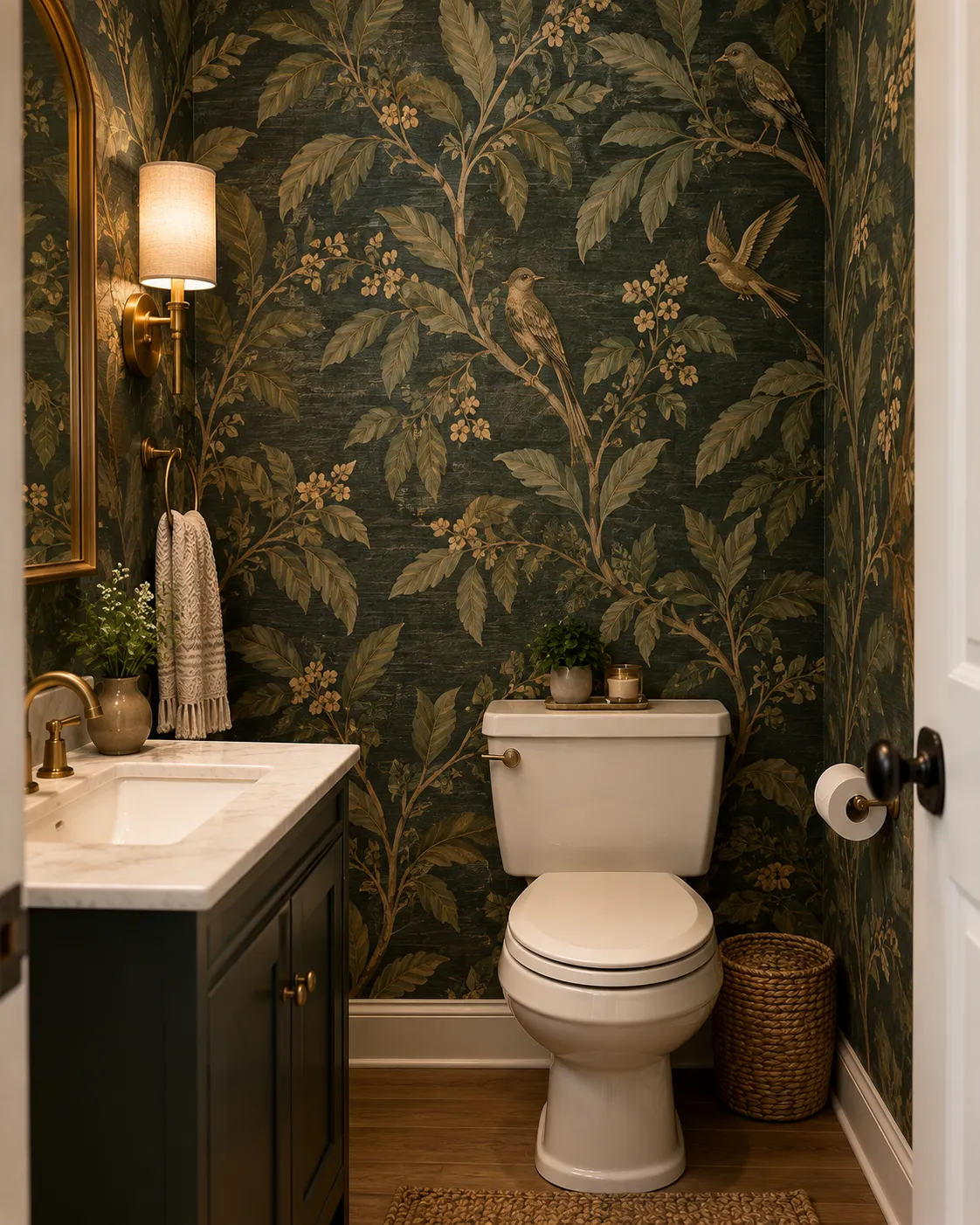
I painted my powder room dark during my 2018 gut — a bottle-green grasscloth, specifically, as the one real splurge in an otherwise budget-conscious project — and it’s still the choice I get asked about most. Here’s the honest case for going dark, and the one thing that actually determines whether it works.
Won’t this make the room feel smaller?
This is the real hesitation behind every version of this question, and the honest answer is no — dark paint blurs the corners so you stop reading the room’s exact dimensions, rather than making the walls close in. What actually creates a cramped, cave-like feeling has almost nothing to do with the wall color: it’s a single dim overhead light. Fix the lighting (more on that below) and a dark powder room reads as intentional, not small.
Colors that actually work in a windowless room
Sherwin-Williams Tricorn Black is the go-to for genuine black-and-white drama — high contrast, pairs with almost any metal finish. If you want moody without full black, a deep, muted green like Behr Alpine Trail is closer to what I chose myself: dark enough to feel dramatic, warm enough not to feel cold. Navy and plum work the same way — pick based on what your existing fixtures are, since a colored moody wall reads best with one consistent metal finish rather than a mix of brass and chrome and black all at once.
The lighting step everyone skips
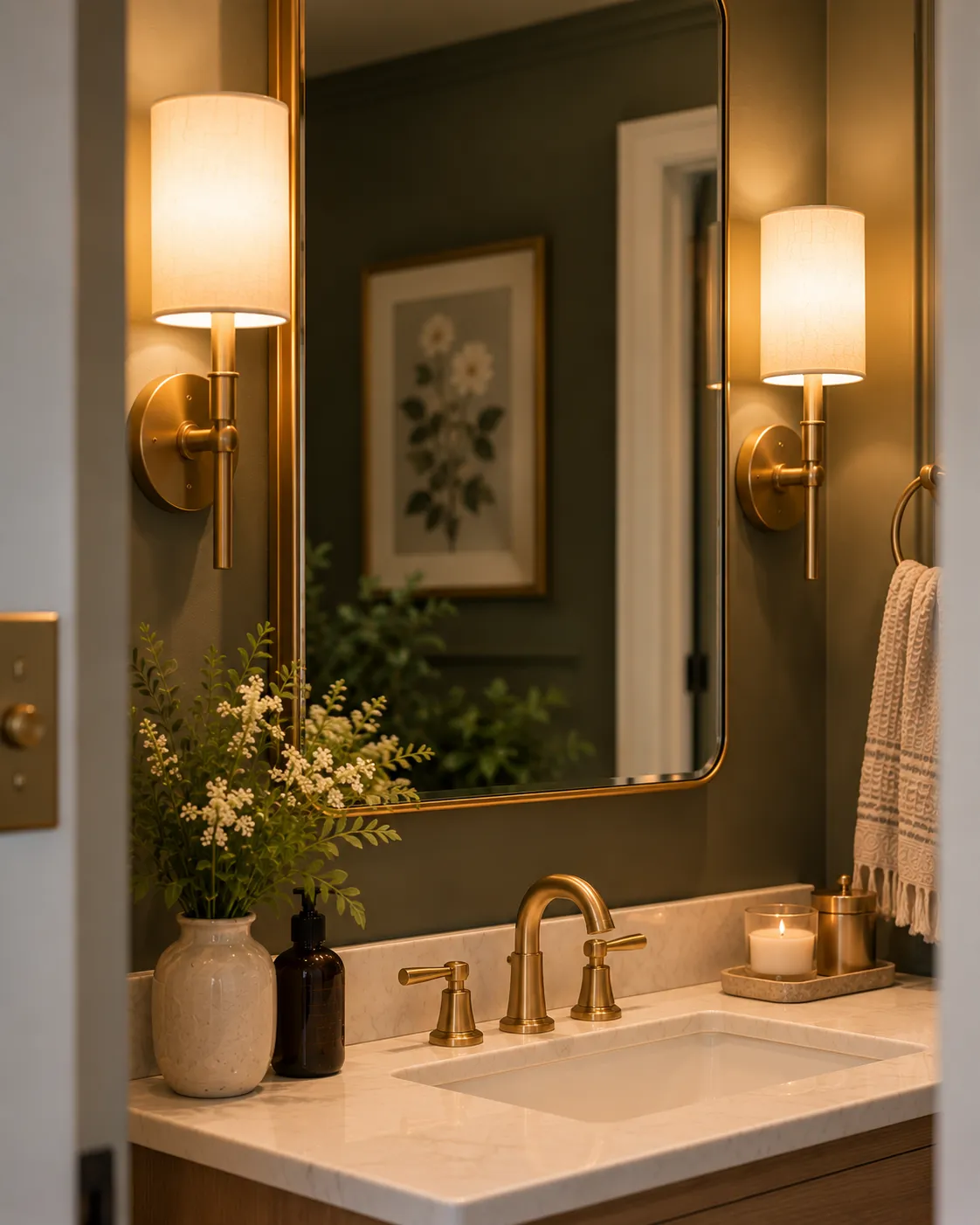
This is the part that actually determines whether “moody” reads as intentional or just dim. Move light to face height with sconces flanking the mirror, instead of relying on a single ceiling fixture, and use warm 2700K bulbs on a dimmer. I’ve seen more dark powder rooms get blamed for “feeling like a cave” because of bad lighting than because of the paint color itself — fix this one thing before you second-guess the color.
Wallpaper and dark color together
These aren’t competing choices — a dark, patterned wallpaper is arguably just a bolder version of the same instinct as dark paint. If you go this route, keep your fixtures simple (one mirror frame finish, one hardware finish) so the wall pattern isn’t fighting for attention with everything else in the room.
Shop the moody look
Common questions
Will a dark color make my small powder room feel like a cave?
In my experience, no — it blurs the corners so you stop reading the room's exact dimensions, rather than making the walls feel closer. What actually creates a cave-like feeling is the lighting, not the color: a single dim overhead fixture on any wall color reads gloomy. Fix the lighting and the "cave" feeling goes away regardless of how dark the paint is.
What's the best dark paint color for a powder room?
Sherwin-Williams Tricorn Black for true black-and-white drama, or a deep, muted green like Behr Alpine Trail if you want moody without going fully black — that's the direction I went with my own grasscloth in 2018. Both work well in a room with no natural light, which is most powder rooms.
Do I need different lighting if I go dark?
Yes, and this is the step people skip. Move light to face height with sconces beside the mirror instead of relying on a single overhead fixture, and use warm 2700K bulbs on a dimmer. A dark room with the wrong lighting reads as dim and gloomy; the same dark room with sconces and warm light reads as intentional and moody. The paint gets blamed for what the fixture is actually doing.
Does dark paint work with wallpaper, or should I pick one or the other?
They can absolutely work together — a dark, patterned wallpaper on the walls is arguably a bolder version of the same idea, not a competing one. If you want pattern and color both, just make sure your fixtures (mirror frame, hardware) stay simple so the wall isn't fighting itself.
Is black and white the only way to do a moody powder room?
No — black and white is the highest-contrast version, but a deep green, navy, or plum reads just as moody with more warmth. I'd pick based on what your fixtures already are: black and white pairs cleanly with almost any metal finish, while a colored moody wall works best with one consistent metal (brass or black) rather than a mix.