Bold and Statement Wallpaper for a Powder Room

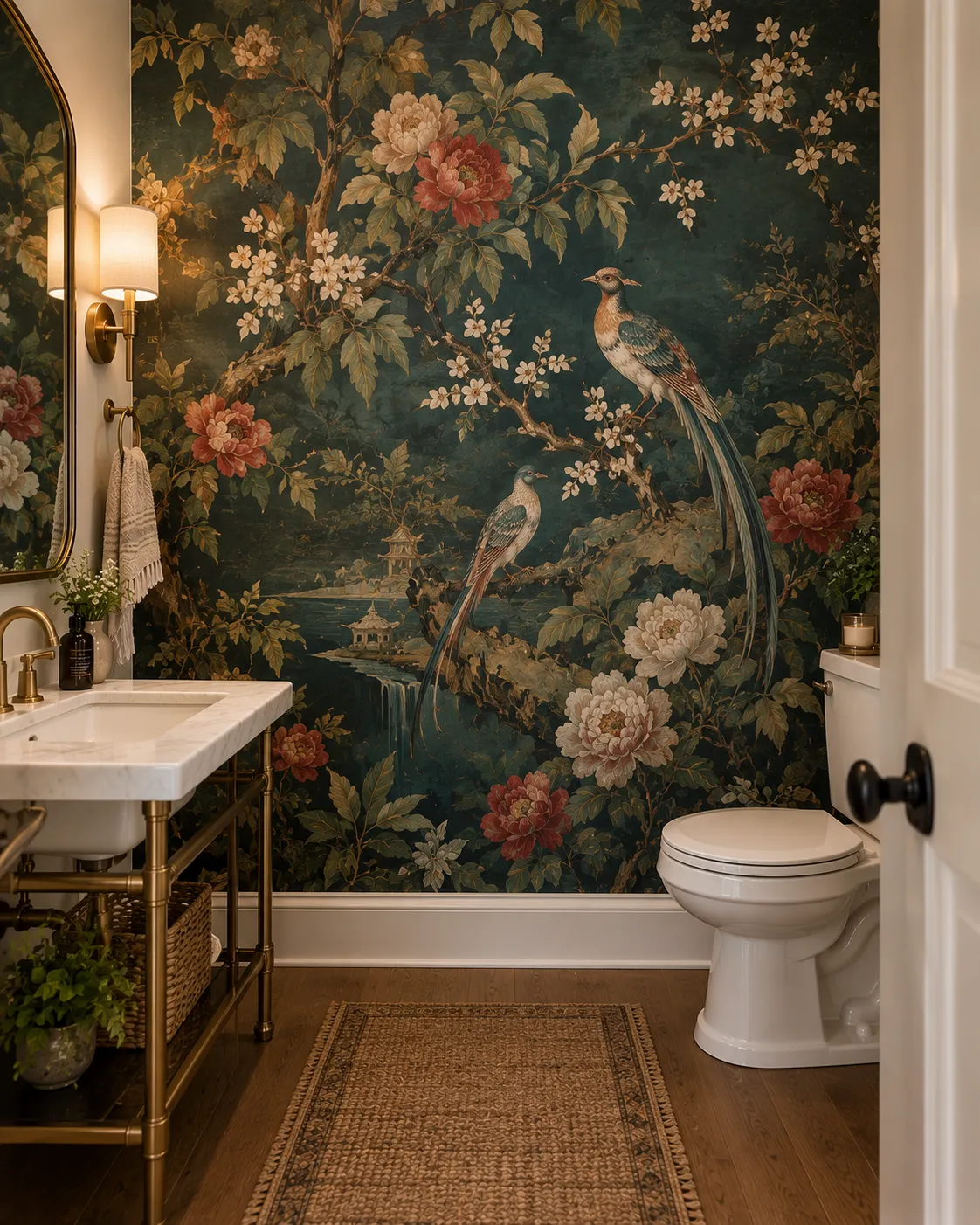
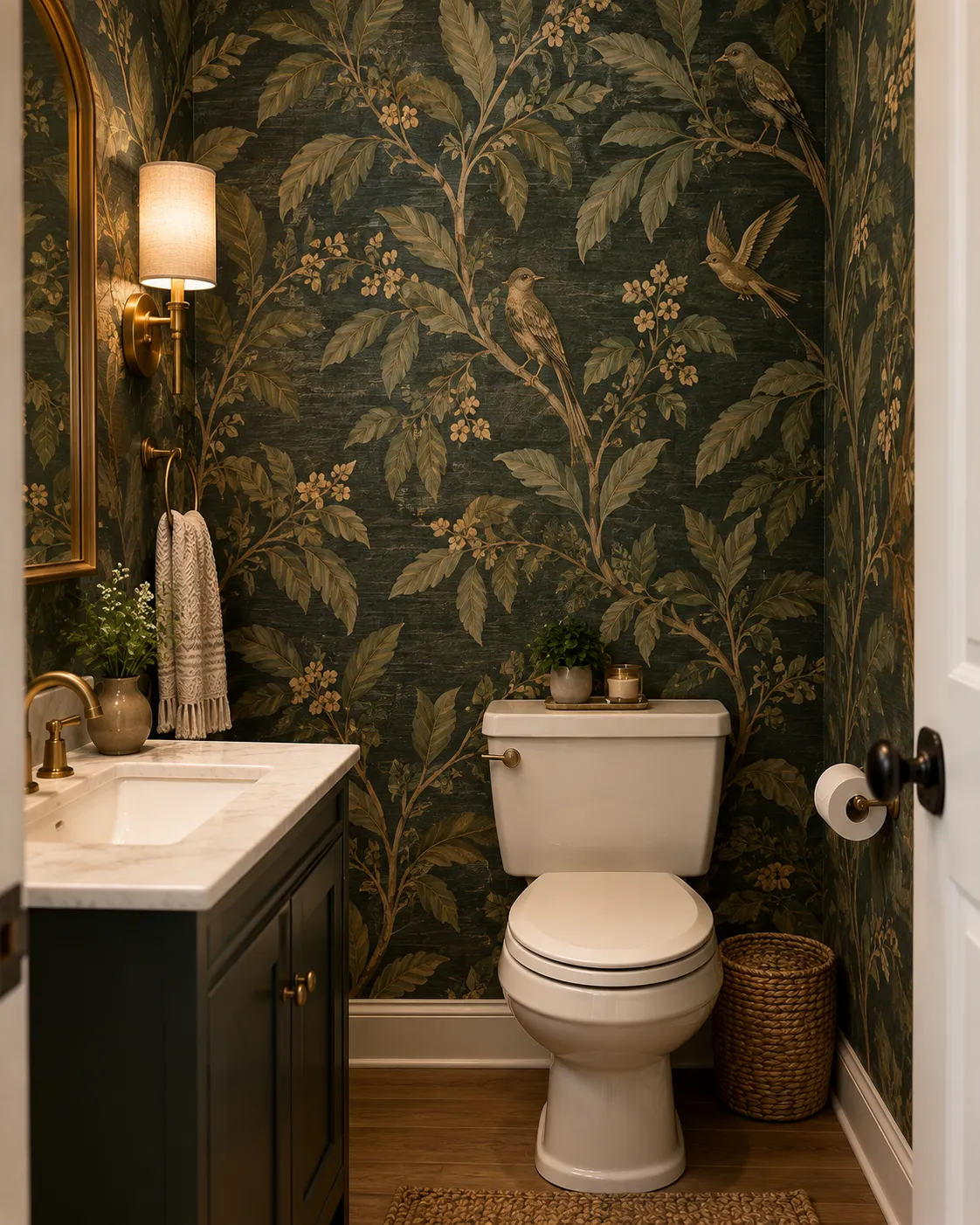
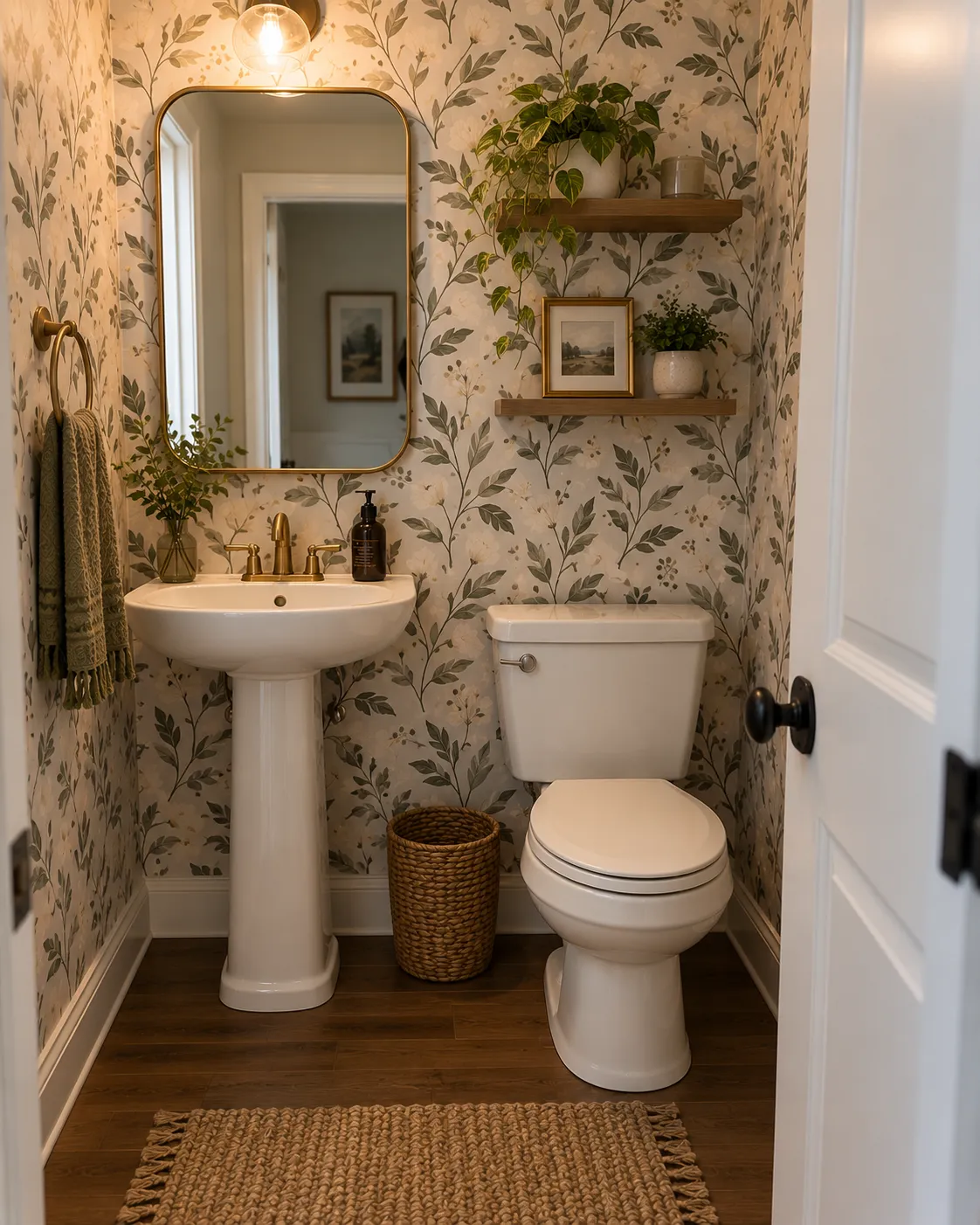
The instinct to keep a small powder room’s pattern small is backwards, and it’s the single biggest thing I’d tell someone before they shop for wallpaper here. A large-scale, genuinely dramatic pattern reads as one whole scene from the doorway; a small, cautious print gets fragmented across a small wall and ends up looking busier, not calmer.
Check the repeat against your actual wall
Before you order anything, hold the pattern repeat’s real dimensions up against your narrowest wall. A repeat that only shows a quarter of its full motif on that wall reads as a random crop, not the deliberate scene you saw in the product photo. Stand in the doorway and picture it as a whole, since that’s the view most guests actually get — not the close-up crop most product photography shows you.
Ceiling wallpaper is the move most people skip
Wrapping a bold pattern onto the ceiling, not just the walls, removes the visual “lid” a plain white ceiling puts on a small room — it can genuinely read as taller rather than more closed-in. It’s a bigger job than walls alone (more material, harder installation angle), but in a room this size, the total material cost stays reasonable even with the extra coverage.
When bold is actually the wrong call
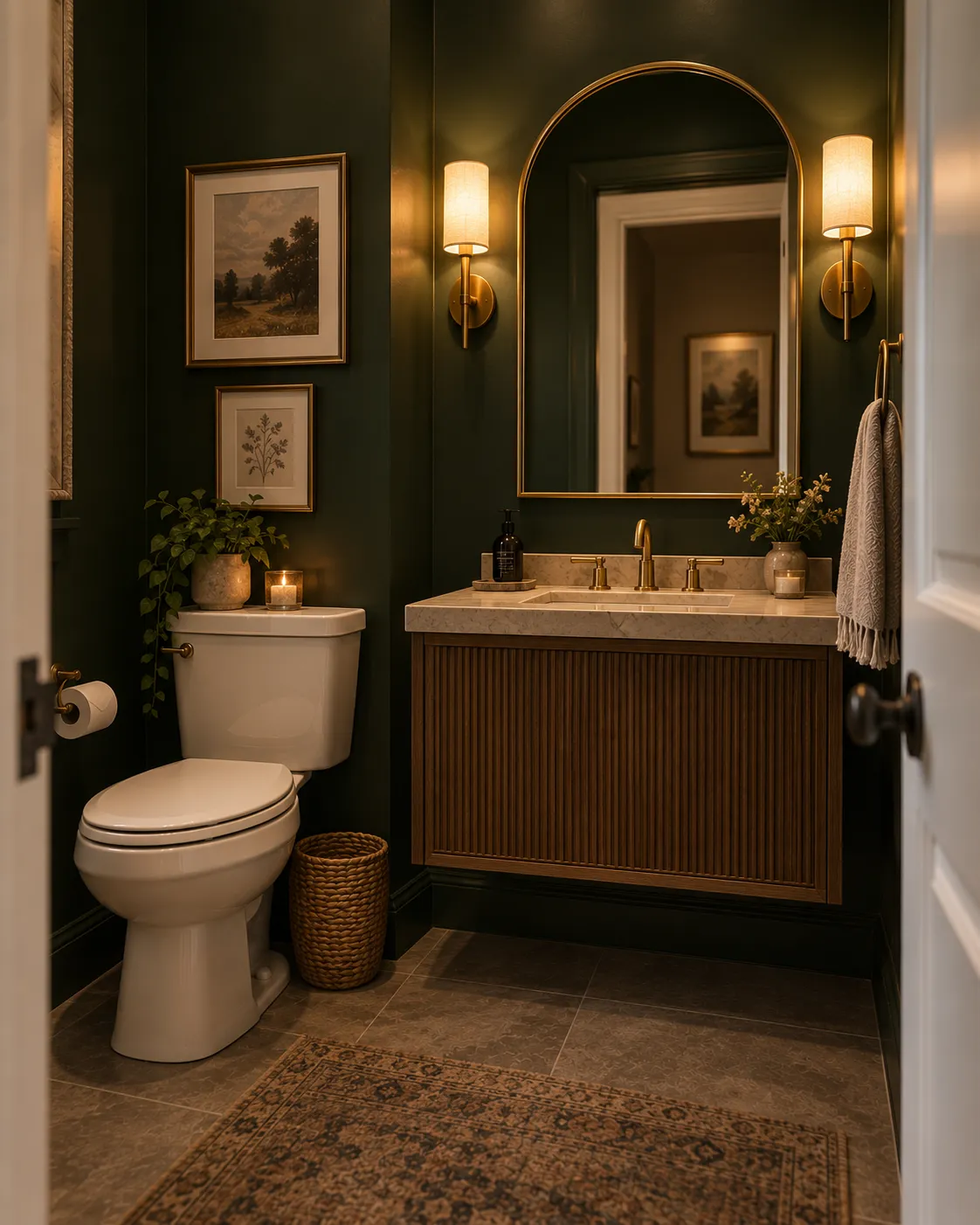
Bold wallpaper wants a quiet supporting cast. It goes wrong when it’s competing with something else already loud — a heavily patterned tile floor, an ornate mirror frame, hardware in three different finishes. When I helped my college friend redo his 1920s bungalow powder room, the version that actually worked was the one where we let the wallpaper be the only loud decision in the room and kept everything else — fixtures, hardware, floor — deliberately quiet.
Where to find the pattern itself
I go through specific real products and prices — including large-scale designer prints and a full mural option — in the main wallpaper guide. This page is about the decision framework; that one has the actual picks.
Quick questions
Does a big pattern make a small powder room feel smaller?
Usually the opposite, and it's counterintuitive enough that people talk themselves out of it. A small pattern gets fragmented across a small wall and reads as busy; a large-scale pattern is viewed as one whole scene from the doorway, which reads as intentional rather than cramped. The exception is a genuinely awkward room shape — a large repeat can emphasize a bad angle instead of a good one.
Is ceiling wallpaper actually worth doing?
In a room this small, yes, more often than in a full bathroom. Wrapping the pattern onto the ceiling removes the visual "lid" a plain white ceiling creates, which can make the room feel taller rather than more enclosed. It's a genuinely bigger job than walls alone, both in material and in installation difficulty, since you're working overhead.
How do I know if a specific bold pattern will actually work in my room?
Check the repeat size against your actual wall width before ordering, not just the sample photo. A repeat that only shows a quarter of its full motif on your narrowest wall will read as a random crop, not a deliberate scene. Also stand in the doorway and picture the pattern as a whole, not up close — that's the view most guests will actually get.
When is bold wallpaper actually a mistake in a powder room?
When it's competing with something else already loud in the room — a heavily patterned tile floor, an ornate light fixture, a statement mirror with a busy frame. Bold wallpaper wants a quiet supporting cast: simple fixtures, a plain floor or a subtle one, hardware in one consistent finish. I saw this go wrong more than right when I helped my friend redo his 1920s bungalow — the room that worked was the one where we let the wallpaper be the only loud thing in it.
Should I hire a professional for a large-scale or mural pattern?
For a true photo-mural sold in fixed panels, I would, unless you've hung wallpaper before — panel alignment mistakes are more visible on a large scene than on a small repeat. For a large-scale repeating pattern (not a mural), a confident first-time DIYer can still manage it, as long as you're honest with yourself about pattern-matching patience.