What Is a Powder Room?

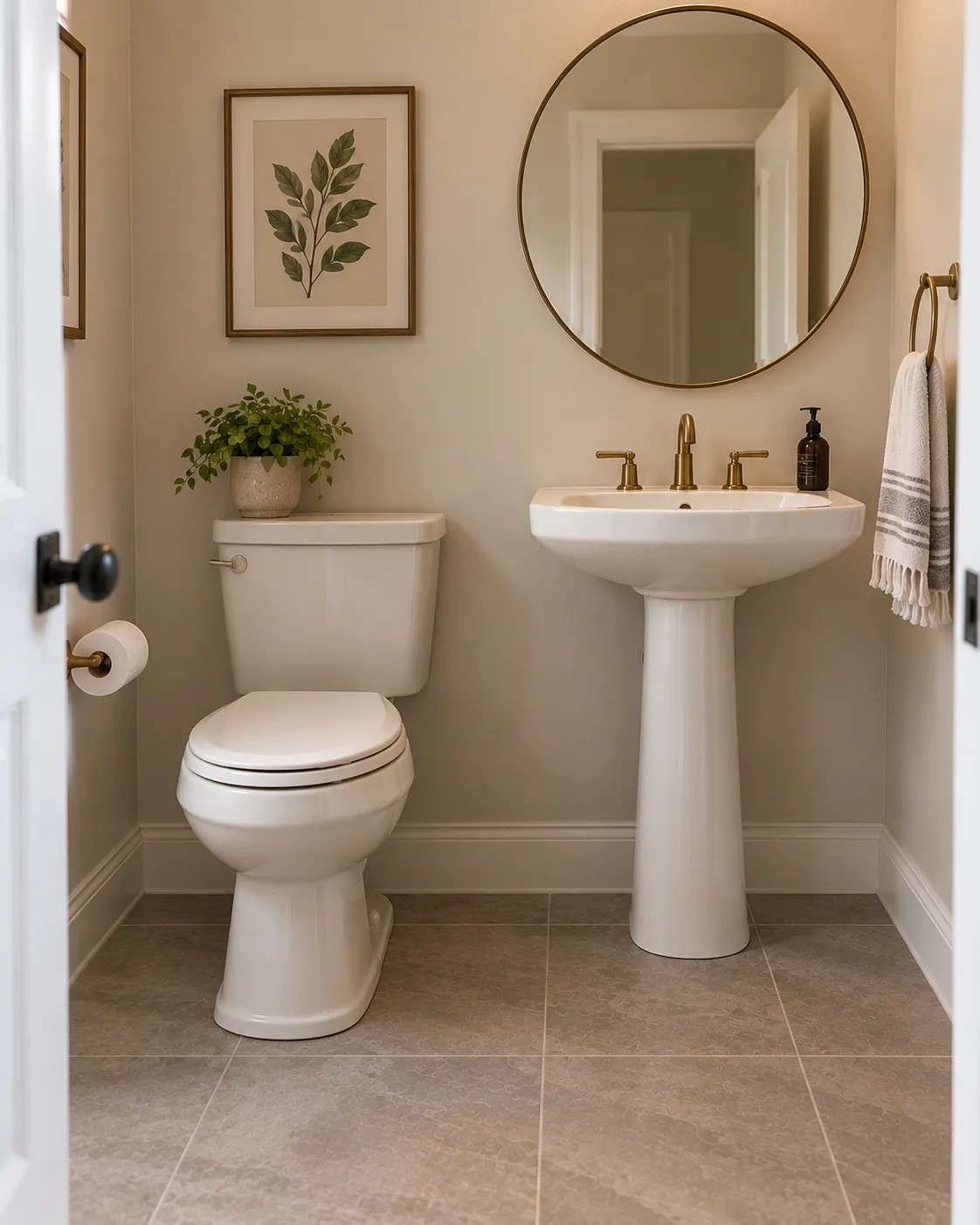
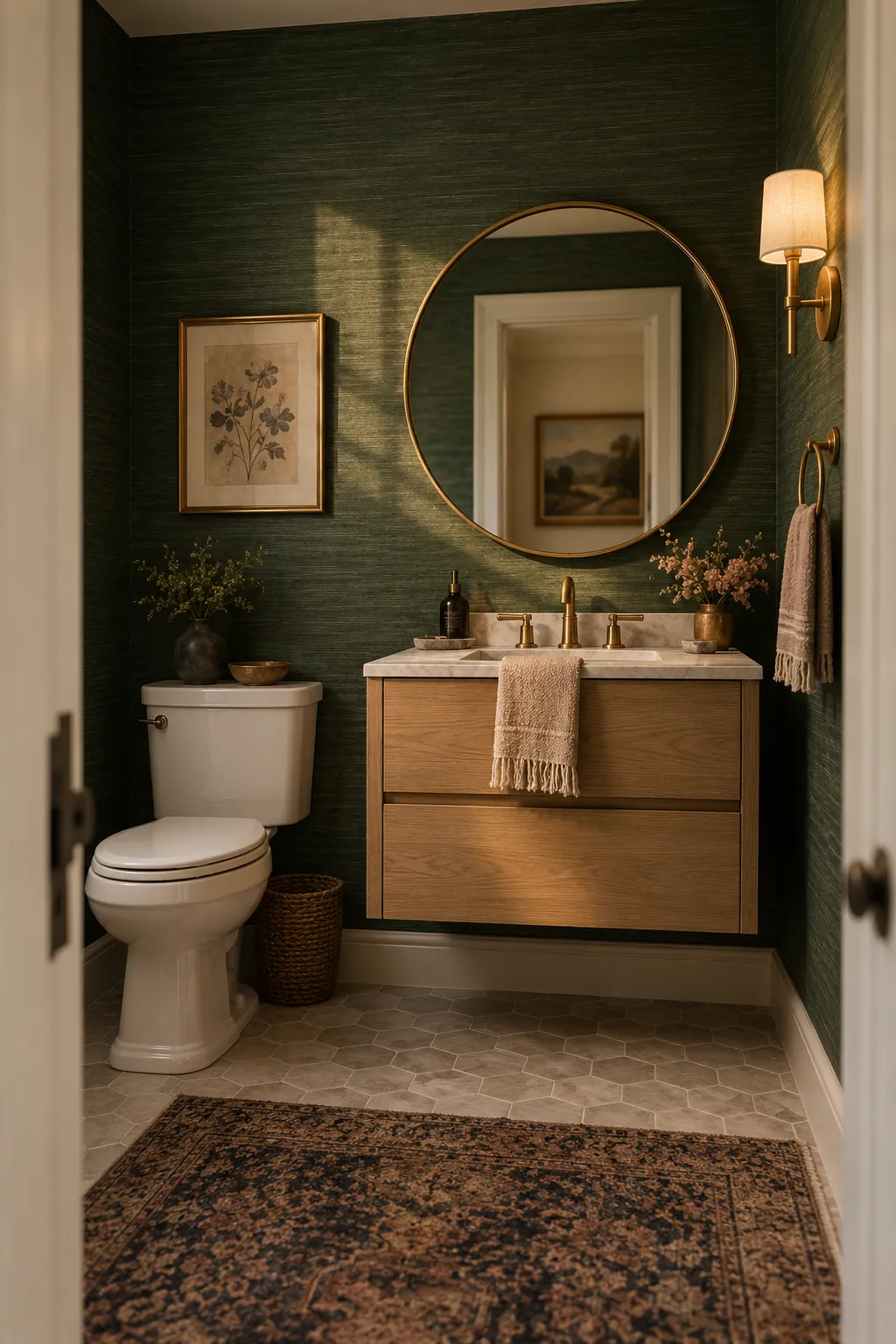
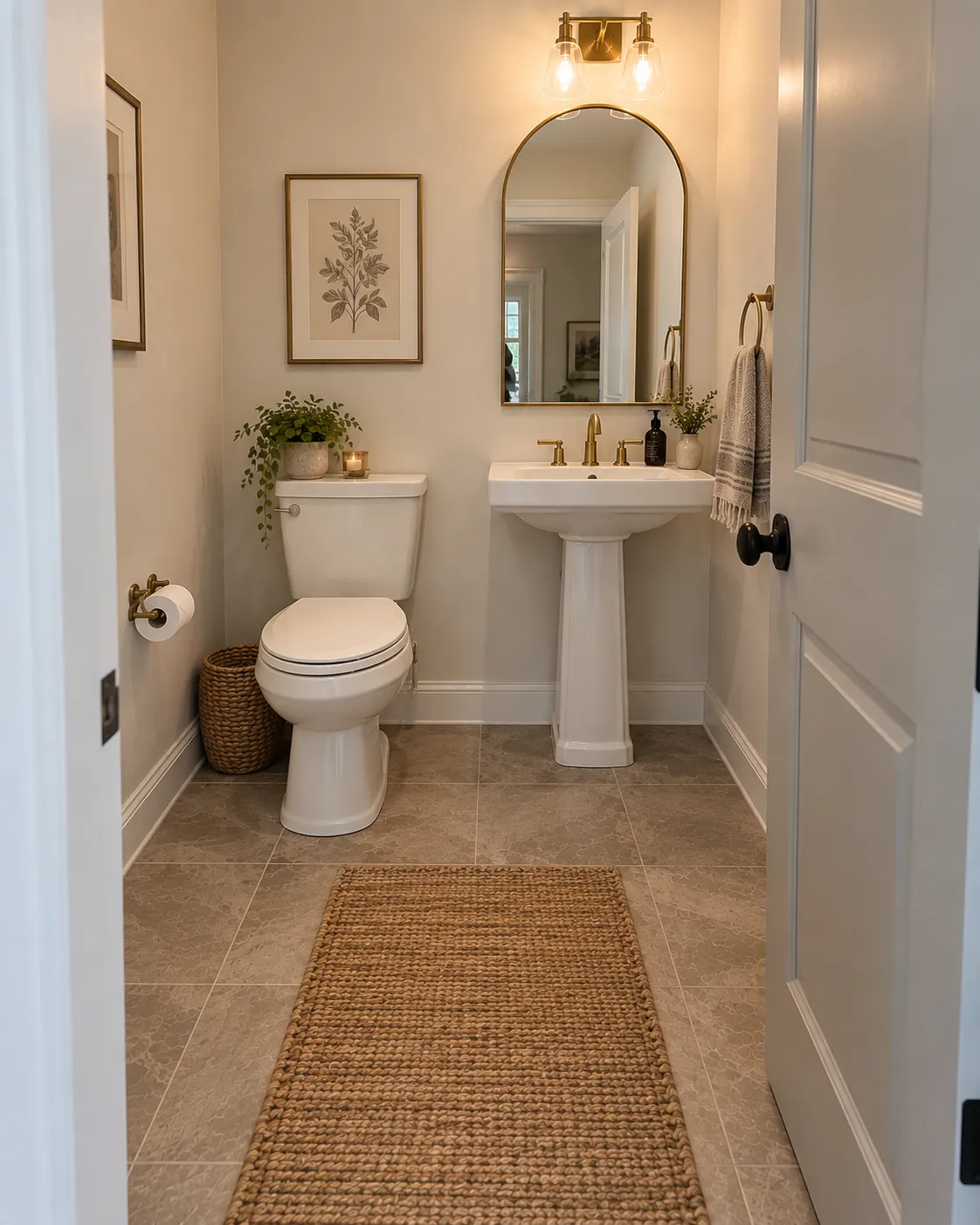
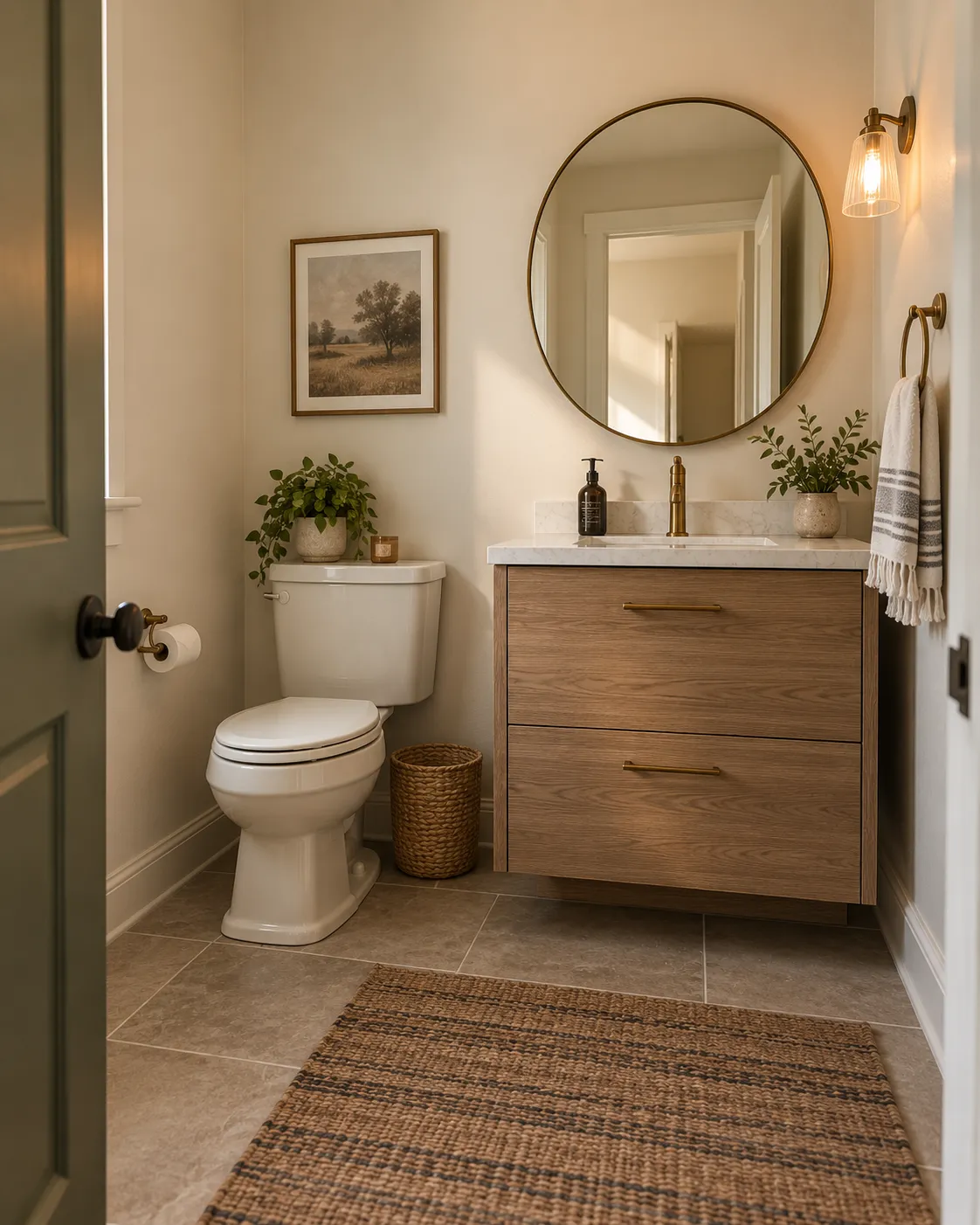
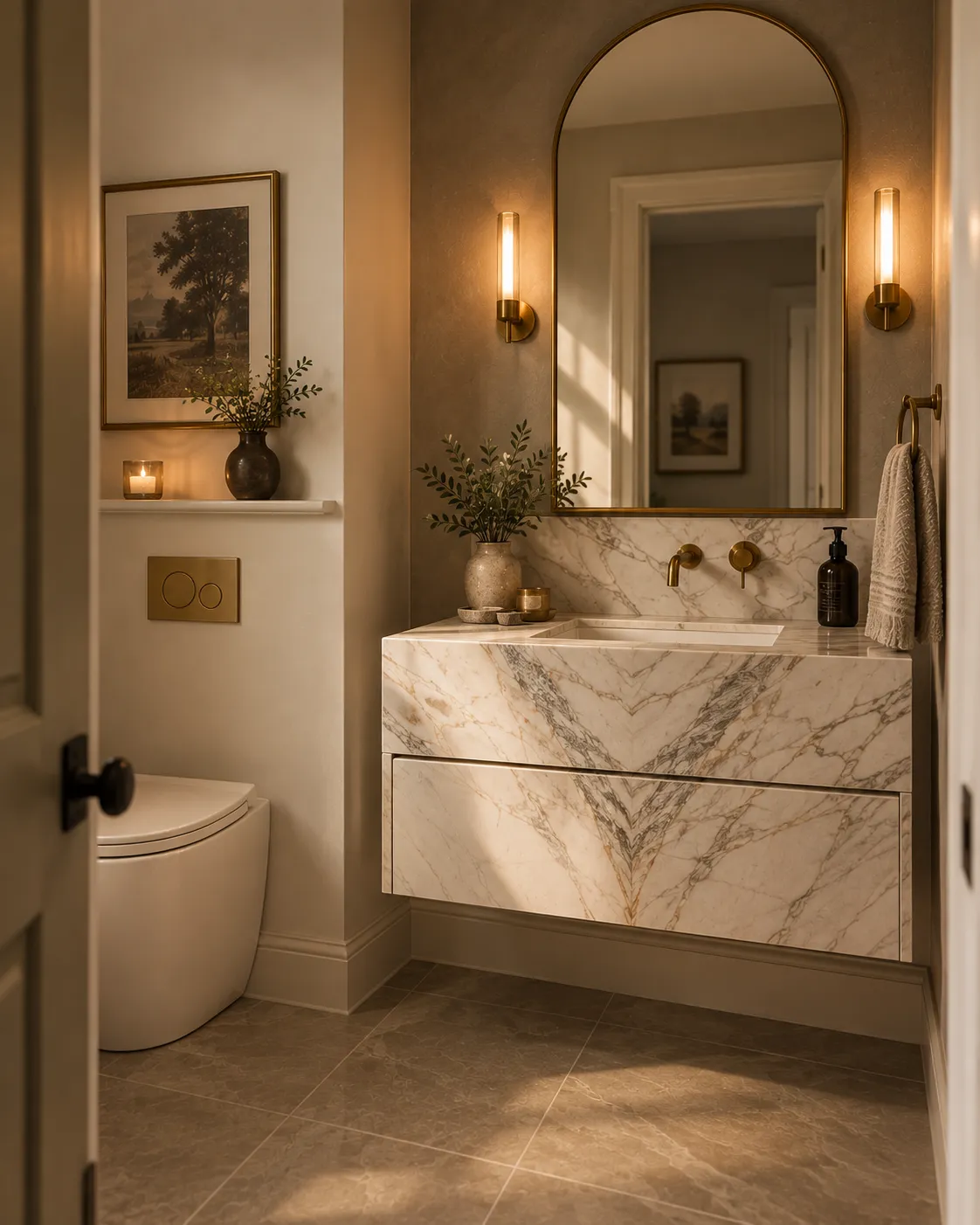
A powder room is a small bathroom with just a toilet and a sink — no bathtub or shower. It’s functionally the same thing as a “half bath,” though real estate listings tend to use “half bath” as the formal term and “powder room” as the everyday one. Most are tucked near a home’s entryway or main living area, built for guests rather than daily use.
Powder room vs. half bath vs. full bathroom
The fixture count is what actually separates these. A powder room or half bath has a toilet and a sink — that’s it. A three-quarter bath adds a shower (no tub). A full bathroom has a toilet, sink, and both a tub and shower, or a tub/shower combo. On a real estate listing, this shows up as the “.5” in a count like “3.5 baths” — the powder room is the “.5.”
Where the name actually comes from
I’m not going to pretend this is settled, because it isn’t. One theory traces “powder room” to the 18th century, when a small room near a home’s entry was used to powder wigs before guests arrived. A separate theory traces it to Prohibition-era America, where “I need to powder my nose” was a polite way for a woman to excuse herself. Both show up across different sources, and neither is definitively confirmed as the origin — so take any source (including this one) that states one flatly as fact with a grain of salt.
Does it need a window or a fan?
This is a real code question, not just a design preference. Under the 2018 International Residential Code (§R303.3), a bathroom — half baths included — needs either an operable window (at least 3 square feet of glazing, at least half of it able to open) or a mechanical exhaust fan rated at 50 cfm run intermittently, or 20 cfm continuously. It doesn’t need both. Some states set a stricter bar — California’s Title 24 requires mechanical exhaust ventilation regardless of whether there’s a window.
I’m not a licensed contractor, and code varies by state and even by local jurisdiction on top of that — treat this as a starting point for the conversation with your contractor or inspector, not the final word for your specific project.
Does it add real value to a house?
Yes, in a way that’s disproportionate to its size. An extra bathroom of any kind — even just a powder room — is commonly cited as adding somewhere around 24% to a home’s sale price, though the real number depends heavily on your specific market. It’s also one of the cheapest square-footage-to-impact renovations in the house, which is a big part of why this site exists.
More questions, answered
Is a powder room the same as a half bath?
Functionally, yes — both mean a small bathroom with just a toilet and a sink, no shower or tub. "Half bath" is more common as real-estate/appraisal terminology on a listing sheet; "powder room" is the more common everyday name, especially for one located near an entryway or living area for guests.
Why is it called a powder room?
Nobody has fully settled this. One theory traces it to the 18th century, when a small room near the entry was used to powder wigs before guests were seen. Another traces it to a Prohibition-era euphemism — a woman excusing herself to "powder her nose." Both show up across different sources; I'm not going to pretend one is definitively correct when the history genuinely isn't settled.
Does a powder room need a shower or tub?
No — that's the actual defining feature. The moment a room has a shower or tub, it's a three-quarter or full bathroom, not a powder room, regardless of size.
Does a powder room count as a bathroom for real estate purposes?
It counts as a partial bathroom (a "0.5" in the common X.5-bath listing format), not a full one. It still adds real value — an extra bathroom of any size is commonly cited as boosting a home's sale price by roughly 24% on average, though that varies by market.
Does a powder room legally need a window or an exhaust fan?
Under the 2018 International Residential Code (§R303.3), a bathroom — including a half bath — needs either an operable window (at least 3 square feet of glazing, at least half of it openable) or a mechanical exhaust fan (50 cfm run intermittently, or 20 cfm continuously). It doesn't need both. Some states go further — California's Title 24 requires mechanical exhaust ventilation regardless of whether there's a window. Always check your specific local code rather than treating this as universal; I'm not a licensed contractor and this is general guidance, not a substitute for checking with your jurisdiction.
What's the minimum legal size for a powder room?
This is genuinely more about fixture clearance than a single minimum-square-footage number — a toilet needs at least 15 inches from centerline to the nearest wall and at least 21 inches of clear floor space in front of it, which in practice sets the real minimum. I cover the full clearance and layout numbers in the size and dimensions guide.
Is a powder room the same as a water closet?
Not quite. A water closet, strictly speaking, is just the toilet — sometimes in its own small enclosed compartment, even within a larger bathroom. A powder room always includes a sink alongside the toilet; a water closet doesn't necessarily.
What rooms typically have a powder room near them?
Most commonly the entryway, front hall, or a spot just off the main living area — somewhere a guest can find it without wandering through the house. That placement is part of the definition in practice, even though it's not a strict requirement.