Powder Room Tile and Flooring Ideas That Hold Up

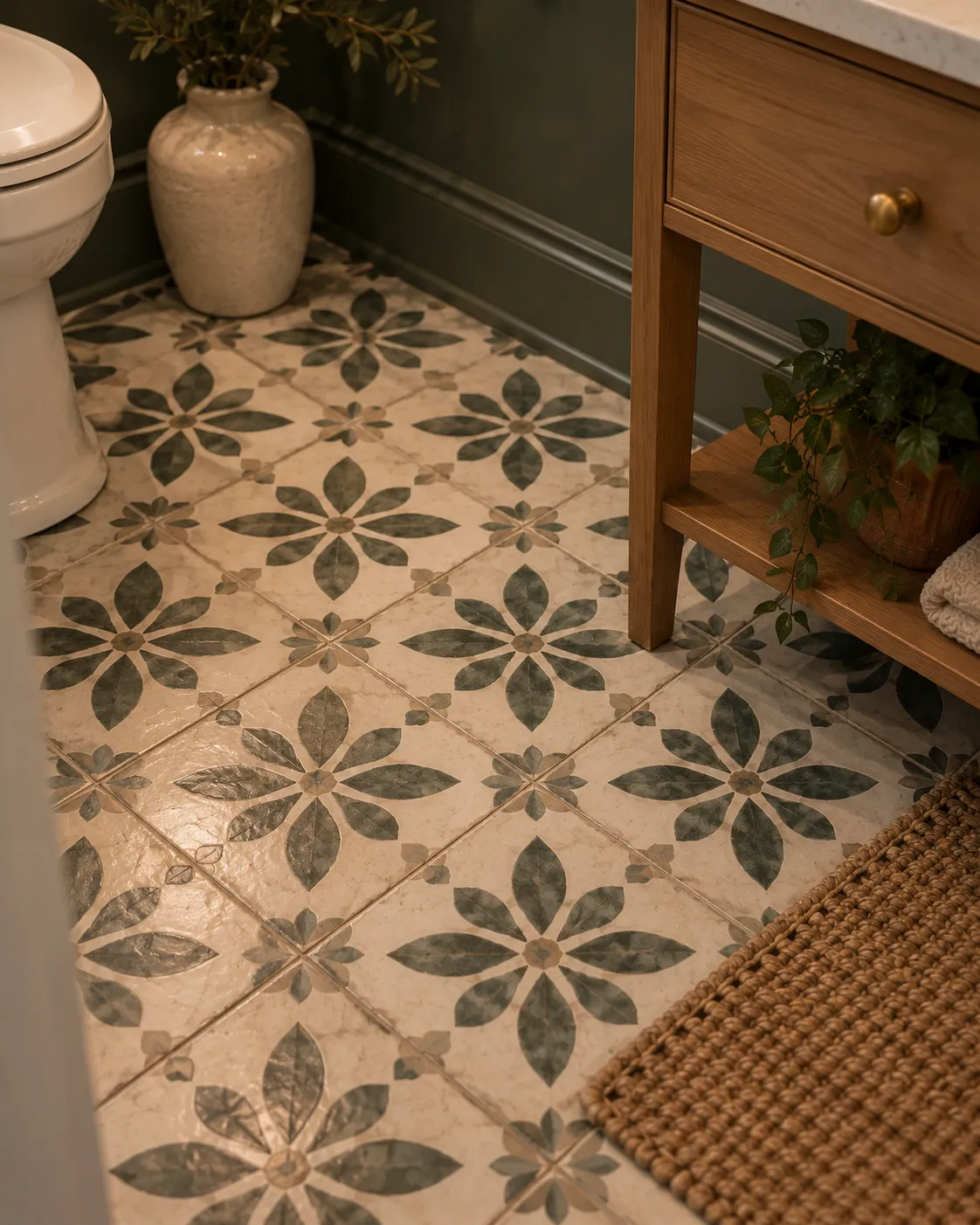
My 2018 gut included a new tile floor, and it’s the project that taught me the one real advantage of a powder room: it’s the cheapest room in the house to be a little extravagant in, because you’re buying so little material. Here’s what I’d actually put on the floor, by budget and material.
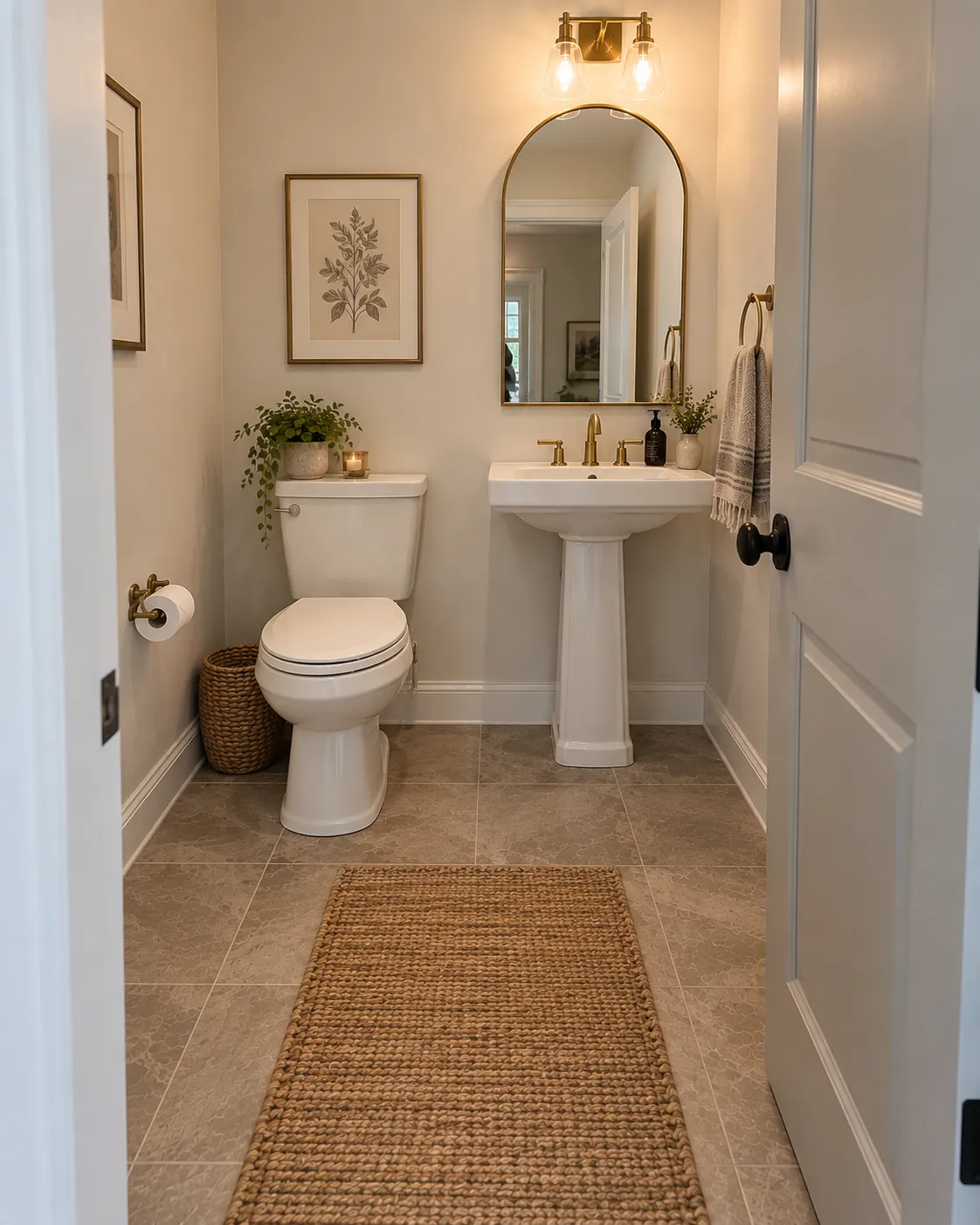
Fewer, bigger tiles mean fewer grout lines, which reads as more spacious in a small room — this is the safest, least risky starting point.

Roughly $2–$4 per square foot
The trade-off: I haven't personally installed this specific tile. Plain matte white is also the least distinctive option here — it's the safe choice, not the memorable one.
Start here if you want a floor that just works, and put your budget into wallpaper or a statement mirror instead.
See large-format porcelain optionsZellige is the handmade Moroccan tile behind a lot of the “expensive-looking powder room” photos you’ve probably seen — and it’s worth understanding the real-vs-faux gap before you buy either one.
$20–$29 per square foot
The trade-off: I haven't installed real zellige myself. It's genuinely harder to install well than a standard tile — irregular tile shapes and thickness variations mean a good installer matters more here than with a factory-uniform product.
Worth the splurge specifically because a powder room floor needs so little of it — this is exactly the kind of one-room extravagance I mentioned above.
See handmade zellige options$5–$12 per square foot
The trade-off: I haven't tested this specific line. Up close, the surface is too perfectly uniform — no crazing, no natural variation — which is the tell if you know to look for it.
The honest choice if the real thing is outside your budget. I wouldn't call it a downgrade so much as a different, still-legitimate material.
See zellige-look tileRoughly $10–$16 per square foot material; $20–$40/sq ft installed
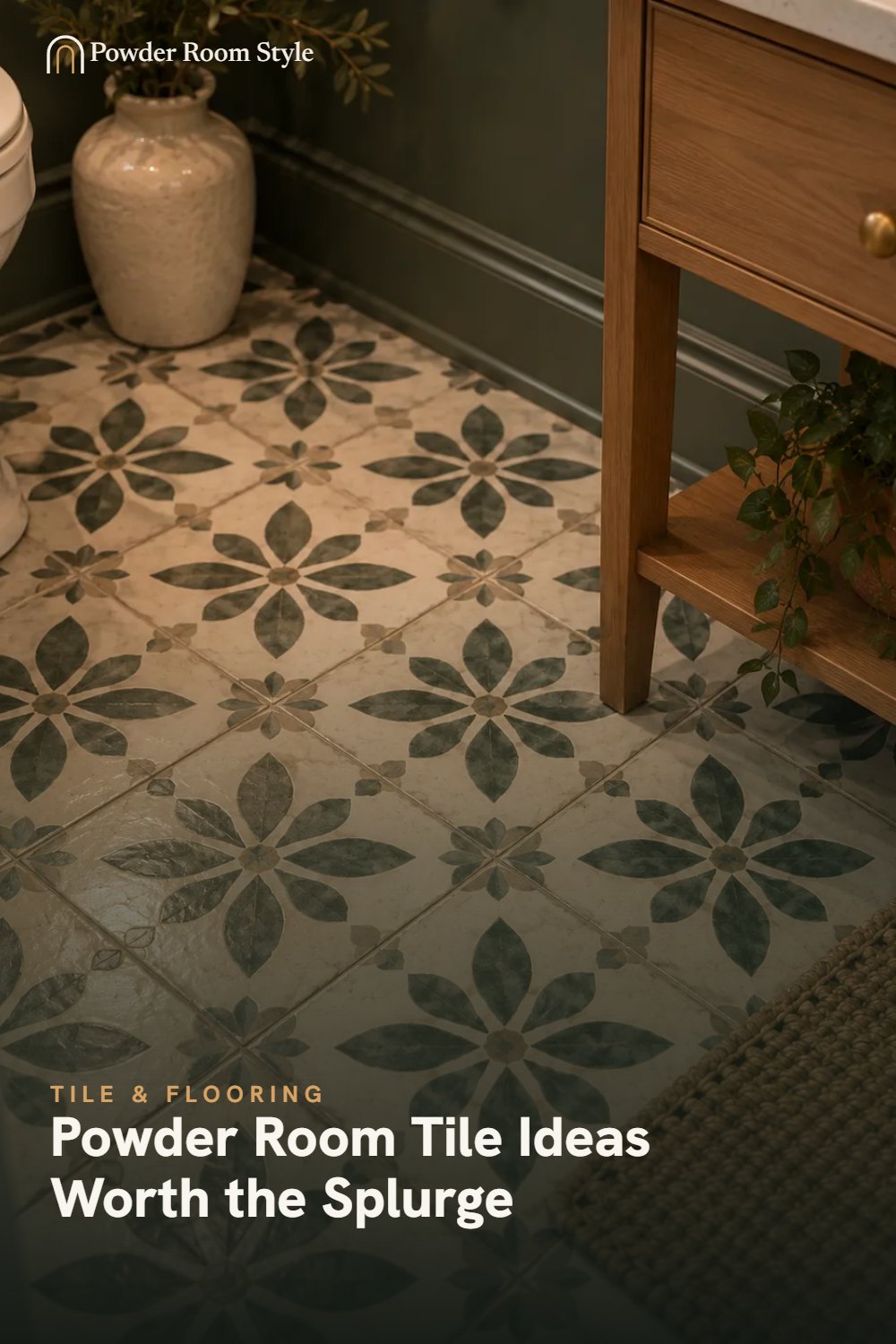
The trade-off: I haven't installed cement tile myself. It's porous and needs aggressive sealing — fine for a powder room floor that stays dry most of the time, but I'd avoid it directly in the splash zone at the base of the vanity, and plan to reseal it periodically.
A strong pick for a genuinely graphic floor, as long as you go in accepting the sealing maintenance rather than treating it as a set-and-forget material.
See patterned cement tileA grout color close to the tile itself reads seamless and makes the floor feel bigger — the safer choice if you want the tile to feel expansive. A contrasting grout turns every tile edge into a visible line, which looks intentional in a basketweave or herringbone layout and busy in a plain grid. Pick it on purpose; it’s not a detail to leave to whatever the installer has on hand.
This is the one room in the house where the small footprint actually works in your favor. A typical 40-square-foot powder room floor needs well under 50 square feet of tile with waste factored in. At budget porcelain prices ($2–$8/sq ft material), that's under $400 in tile. At real zellige or handmade cement tile prices ($18–$28/sq ft), you're still likely under $1,200 in material — a tile that would be a serious splurge in a full bathroom is genuinely affordable here.
Not automatically, but it needs real care. Cement tile is porous and requires aggressive sealing, and it's best used where the floor stays dry most of the time — which describes most powder rooms, since there's no shower. I'd still avoid it directly in the splash zone right at the base of the vanity, and reseal it periodically rather than treating it as maintenance-free.
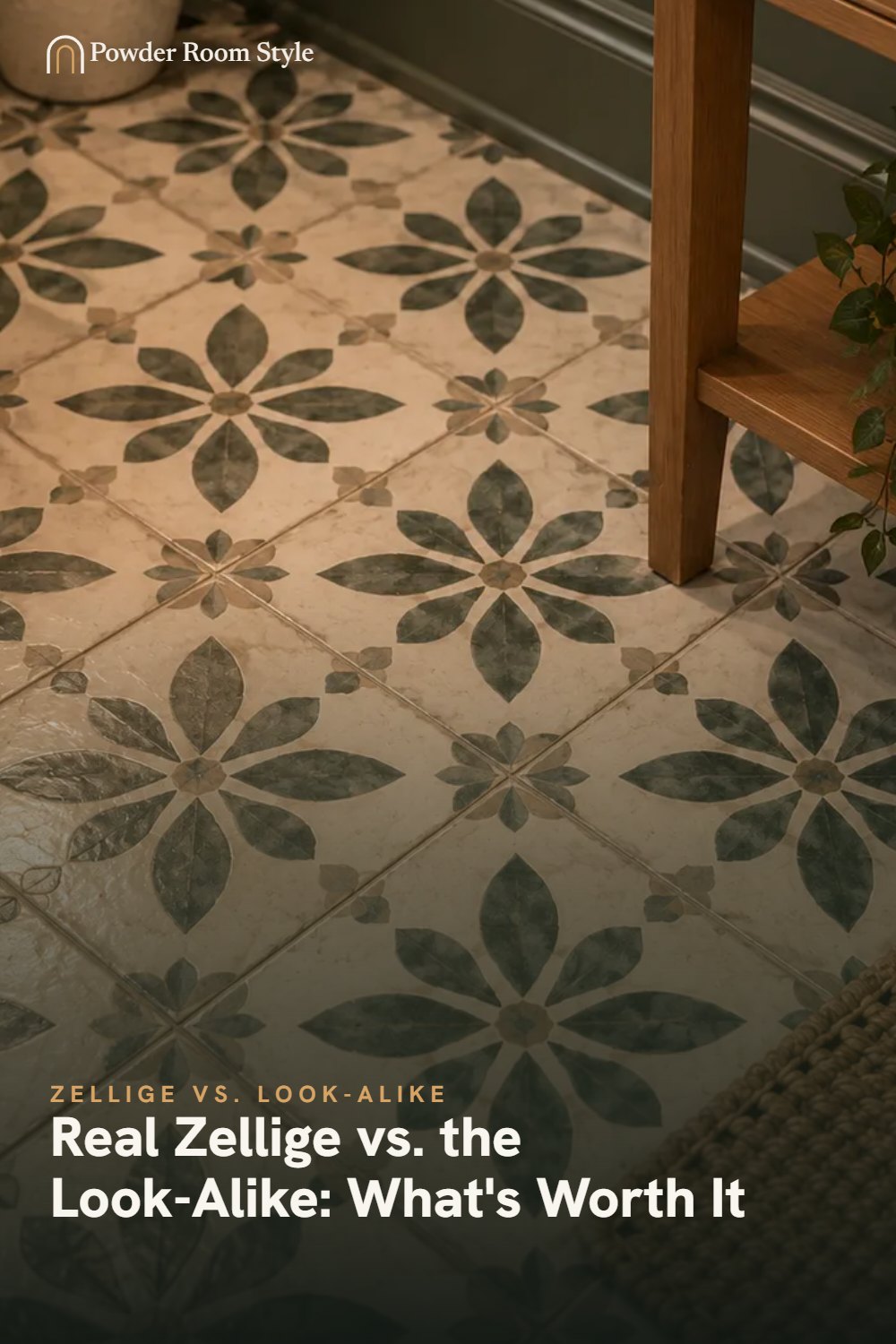
Real, handmade zellige runs roughly $18–$28 per square foot and shows small natural irregularities — hairline "crazing" cracks, slight color variation, edges that aren't perfectly uniform — which is the actual sign it's authentic, not a flaw. Faux/mass-produced versions cost roughly half that ($6–$10/sq ft) and look nearly identical in photos, but the surface is too perfectly uniform up close if you know what to look for.
Generally yes. Fewer, bigger tiles mean fewer grout lines, which reads as more spacious and more modern than the same square footage in small mosaic tile. The exception is a shower or a heavily sloped floor needing drainage — not a concern for a standard flat powder room floor.
More than people expect. A grout color close to the tile color reads seamless and makes the room feel bigger; a contrasting grout turns every tile edge into a visible line, which can look intentional (basketweave, herringbone) or busy (a plain grid), depending on the pattern. I'd pick grout color as a deliberate decision, not an afterthought.
One email, every other Sunday
Plus one small-space fix each issue. No affiliate dumps, no 40-item roundups.
No spam. Unsubscribe in one click.