Powder Room Lighting and Chandeliers: Getting It Right


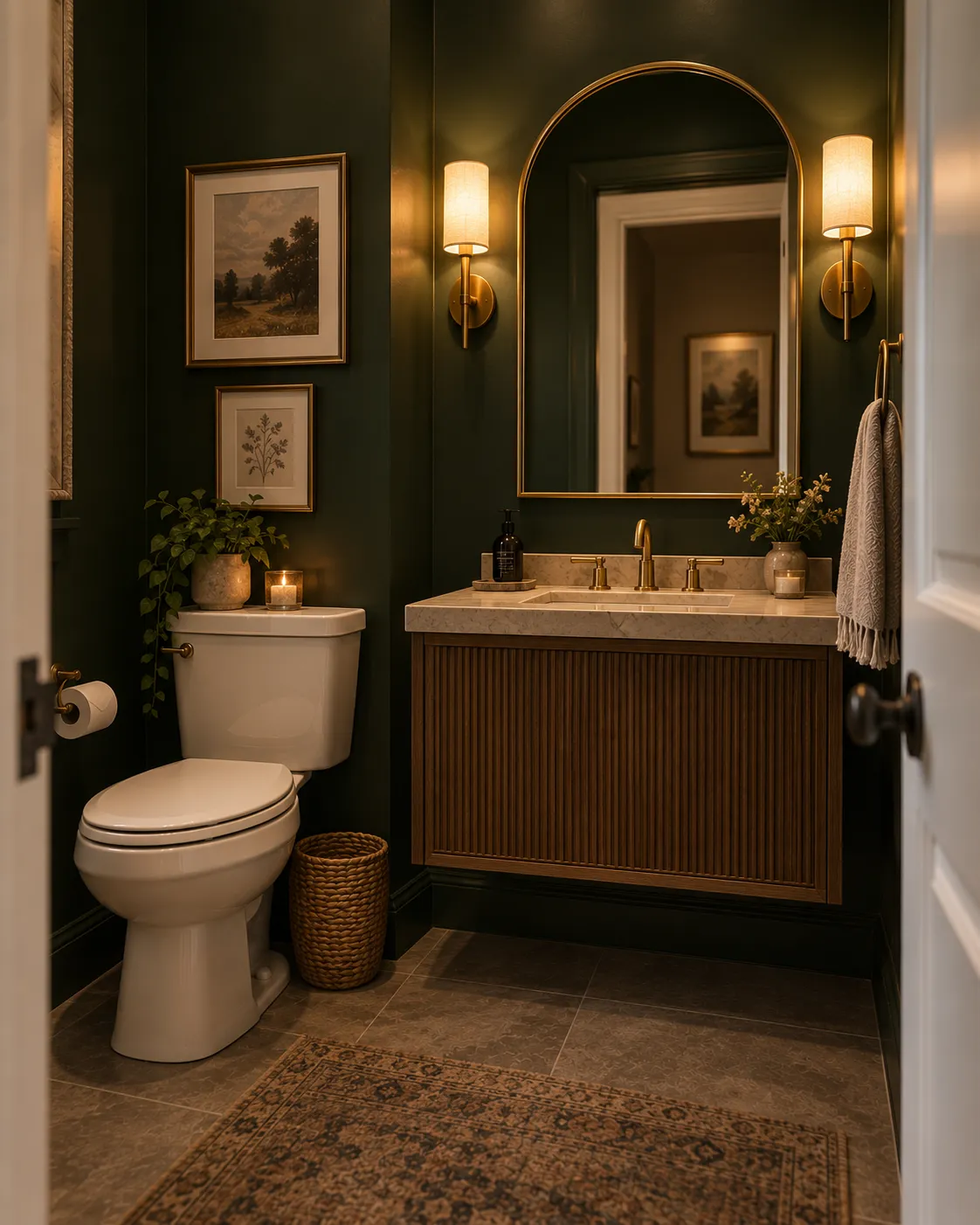
Lighting was part of my 2018 gut, and it’s the change that gets the least credit for how much it actually affects a room — a dark or dramatic paint color gets blamed for a gloomy powder room far more often than the actual culprit, which is almost always the light fixture.
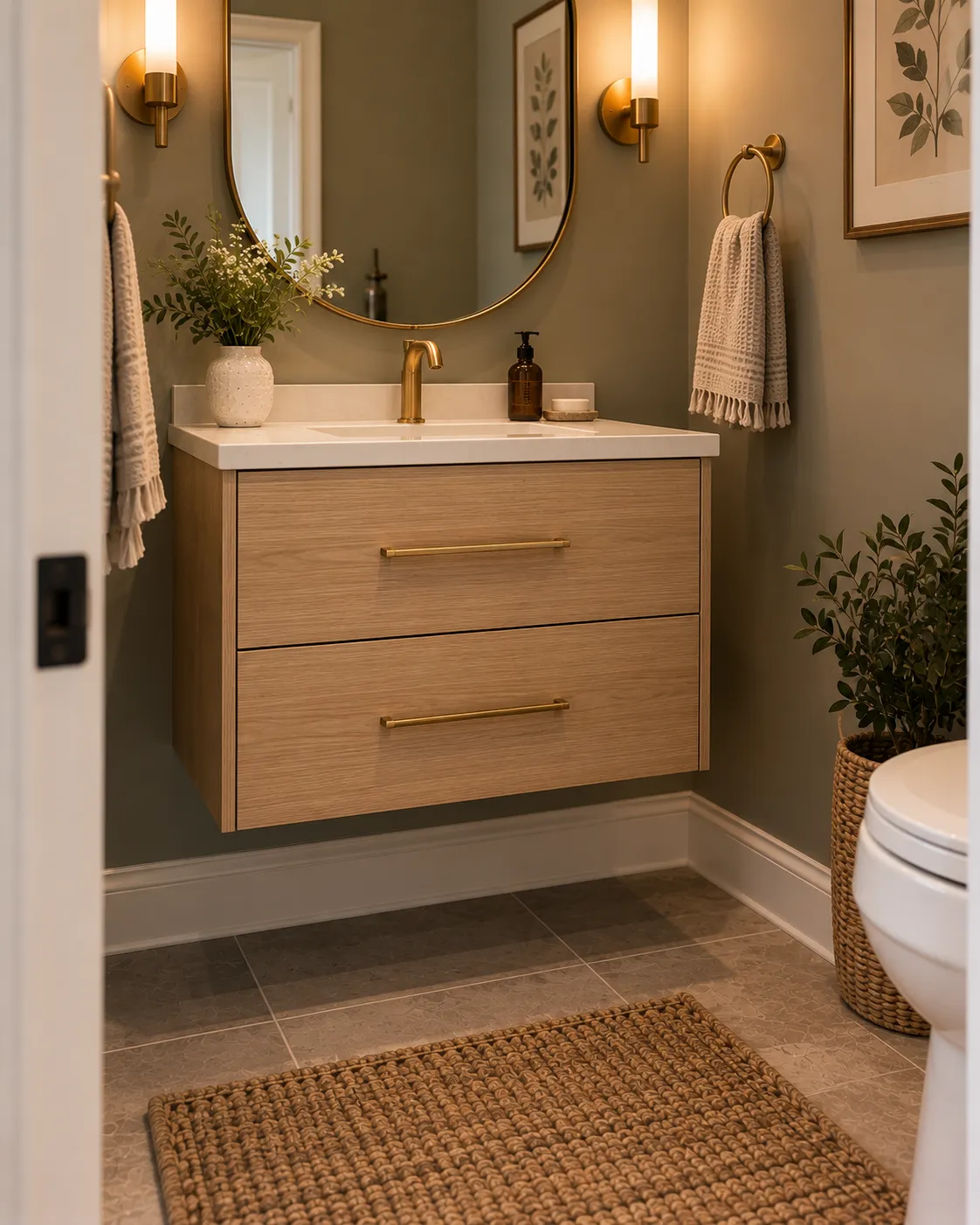
Sconces flanking the mirror at 60 to 65 inches from the floor to the fixture’s center put light at actual face height, which eliminates the harsh shadows a single overhead fixture creates. This one number matters more than the specific style of sconce you choose.
$135–$175
The trade-off: I haven't installed this specific fixture. At 22.5 inches wide, confirm it fits your actual mirror/vanity width before ordering — a fixture too wide for the wall reads as crowded.
A solid, real mid-range pick for the classic side-mounted vanity light approach.
See vanity light optionsFor a standard 5×8 foot powder room, a chandelier 12 to 16 inches in diameter anchors the ceiling without overwhelming it. In a larger room, 18 to 24 inches reads more proportional. Measure your actual ceiling area before ordering — this is the single most common mistake with a statement fixture, more than style or finish.
$55–$65
The trade-off: I haven't installed this fixture. A single bulb per sconce means less total light output than a multi-light fixture — fine as flanking sconces paired with a ceiling fixture, not enough as the room's only light source.
My pick for a small or narrow powder room where a full 3-light vanity bar would crowd the wall.
See compact sconce optionsThe area directly above a sink is a “damp location” under electrical code, which means a fixture mounted there needs a damp- or wet-rating, not a standard dry-rated one — check the product listing specifically, since not every attractive fixture is rated for it. Fixtures elsewhere in the room, away from the sink, typically don’t need this rating.
Bathroom outlets need GFCI protection within 6 feet of water, but lighting circuits generally aren’t required to be GFCI-protected outside a shower or tub enclosure — which a powder room doesn’t have. Some local jurisdictions go further than the national code, so this is worth a quick check with an electrician rather than an assumption either way.
60 to 65 inches from the floor to the center of the fixture is the range that puts light at actual face height, which is what eliminates the harsh under-chin and overhead shadows a single ceiling fixture creates. This matters more than the specific fixture style you pick.
For a standard 5×8 foot room, 12 to 16 inches in diameter anchors the space without crowding the ceiling. In a larger powder room, 18 to 24 inches reads more proportional. Measure your actual ceiling area before ordering — a fixture sized for a bigger room will visually overwhelm a small one.
The area directly above a sink counts as a "damp location" under electrical code, which means the fixture there needs a damp or wet rating, not just a standard dry-rated fixture. Fixtures elsewhere in the room, away from the sink, typically don't need a special rating, but check the specific product listing rather than assuming.
Generally, lighting circuits aren't required to be GFCI-protected outside a shower or tub enclosure, which a powder room doesn't have — so this is usually not a requirement here, unlike bathroom outlets, which do need GFCI protection within 6 feet of water. Some local jurisdictions extend GFCI requirements further than the national code, so check with your electrician or local building department rather than assuming the national baseline applies everywhere.
2700K, on a dimmer. It's the warm end of the white-light spectrum, and it's flattering to skin tone and makes brass, wood, and paint colors look intentional rather than washed out. I don't deviate from this rule regardless of the fixture style.
About the author
Michael P. Reed has spent over a decade obsessively renovating, testing, and rethinking powder rooms — starting with his own and eventually everyone else’s. He’s not a licensed interior designer or contractor; he’s a hands-on homeowner who’s repainted the same wall four times to get it right and written down what he learned. Based outside Columbus, Ohio.
More about MichaelOne email, every other Sunday
Plus one small-space fix each issue. No affiliate dumps, no 40-item roundups.
No spam. Unsubscribe in one click.