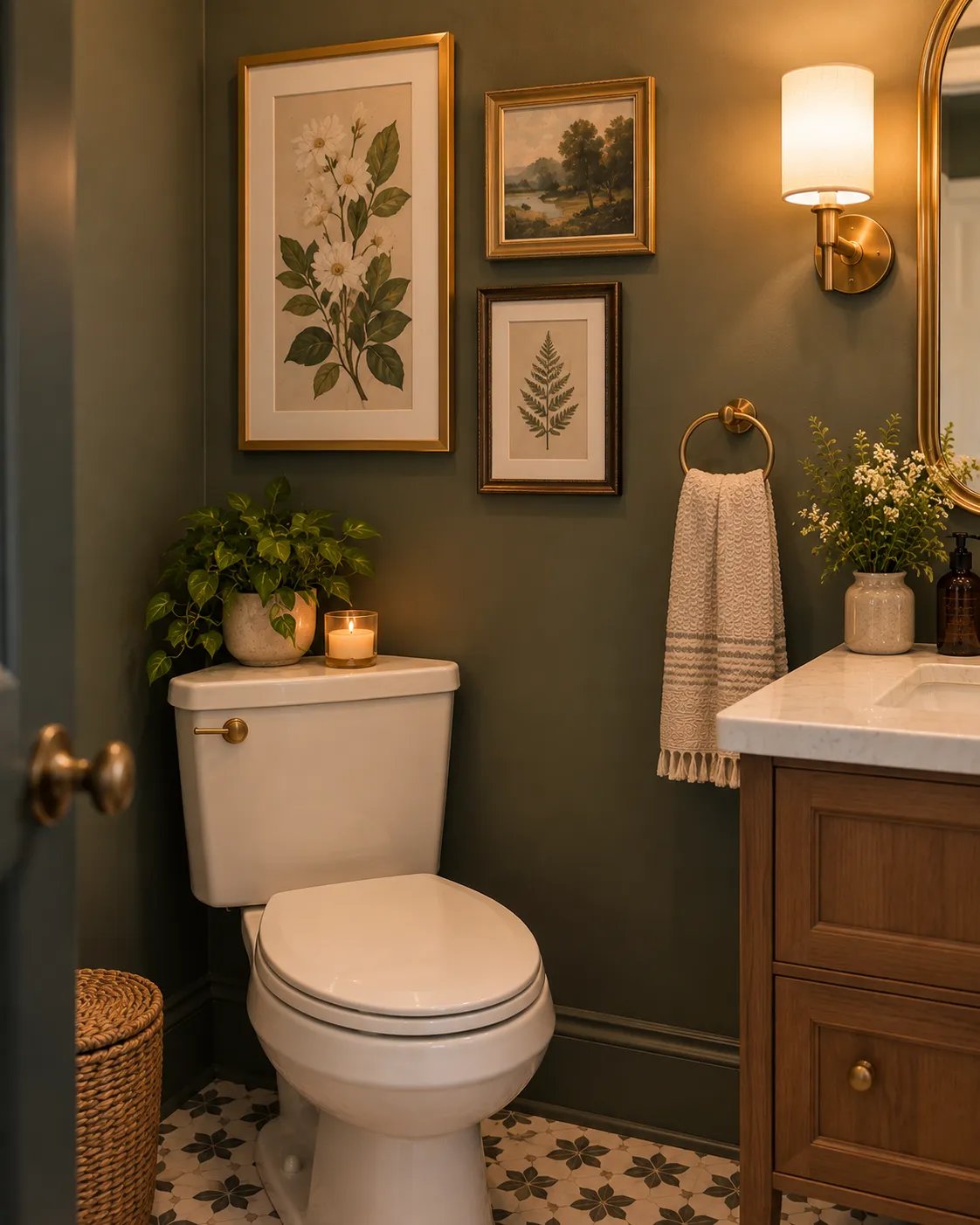
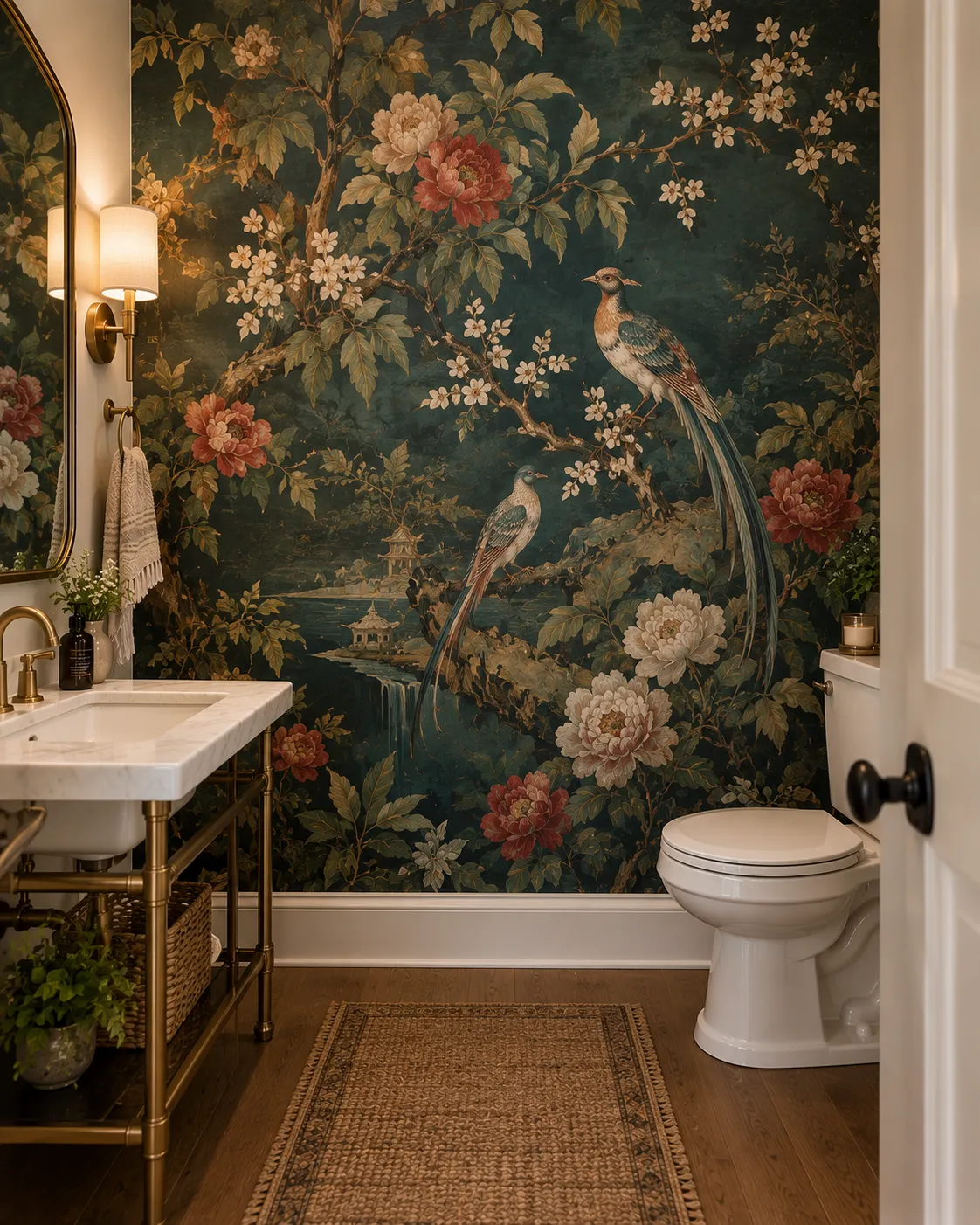
Powder Room Mirrors: Sizing and Styling Them Right

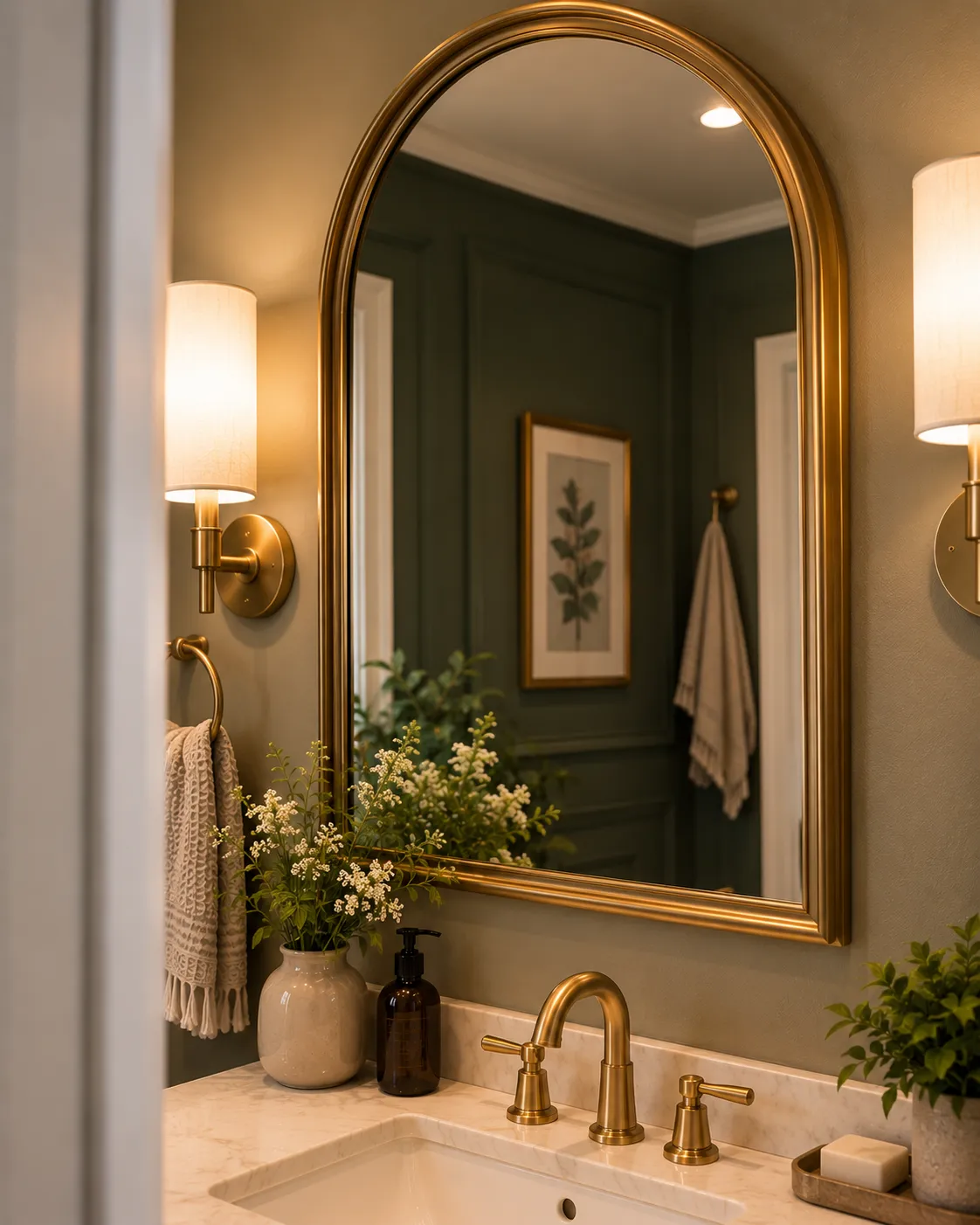
The first thing I changed in my own powder room, back in 2014, was the mirror — out with the builder-grade contractor mirror, in with a basic round one I picked mostly because it was inexpensive. It wasn’t a bad instinct, but it was too small for the vanity, and I didn’t figure out why it looked slightly off until years later. This page is the sizing and styling guide I wish I’d had at the time.
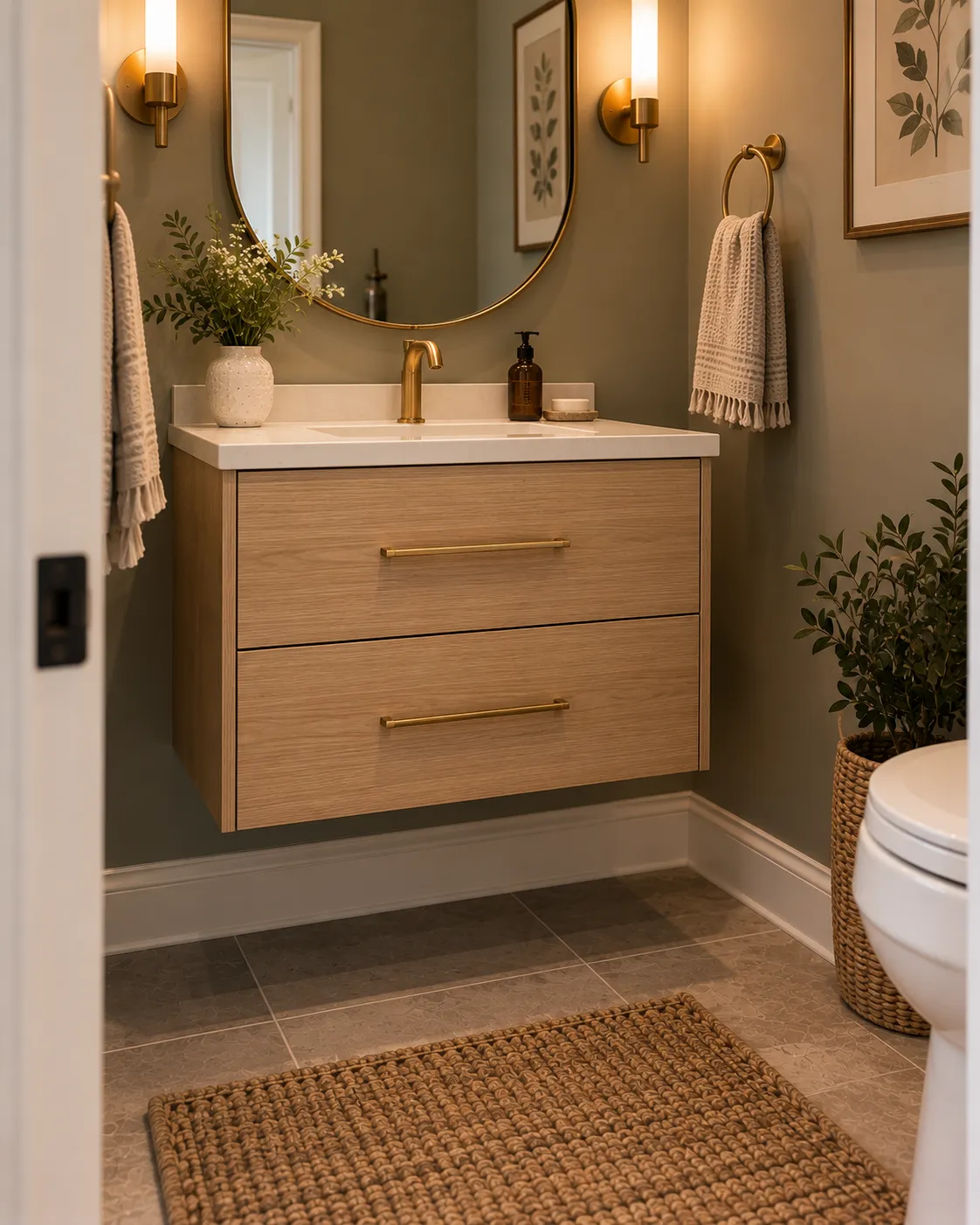
Round is what I went with in 2014, and it’s still my default recommendation for a powder room: it softens a room that’s already full of straight lines — vanity edges, door casing, tile grout.
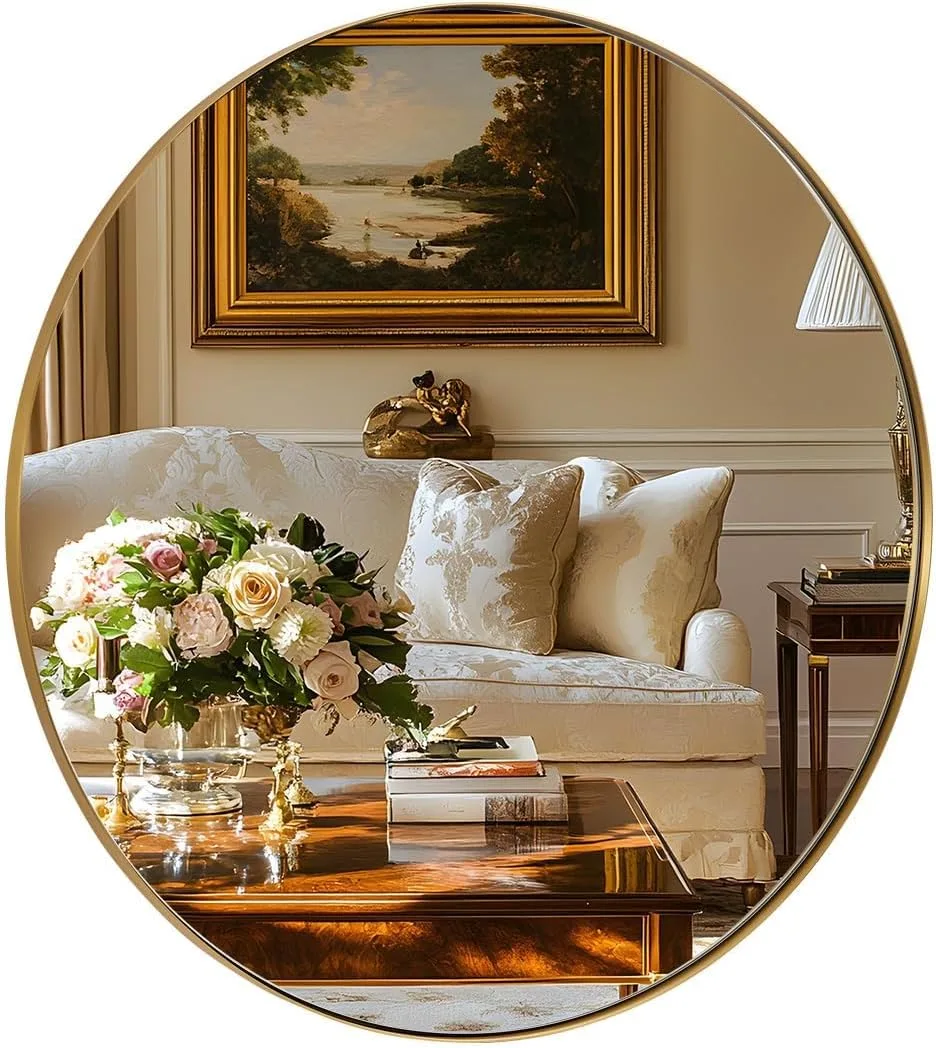
$150–$300
The trade-off: I haven't hung this one myself. Mid-weight price for what is, underneath the brass-toned frame, a plain round mirror — you're paying for the frame quality and finish, not for features.
My pick if you want to do round mirrors right the first time, unlike my own 2014 attempt — just size it properly (see the sizing section below).
See this round mirrorFor a lower-cost round option, a plain metal-framed round mirror from a big-box retailer (Walmart, Target, Home Depot all stock several) runs roughly $20–$95 depending on size and frame finish — the same shape and most of the effect, without the brand name.
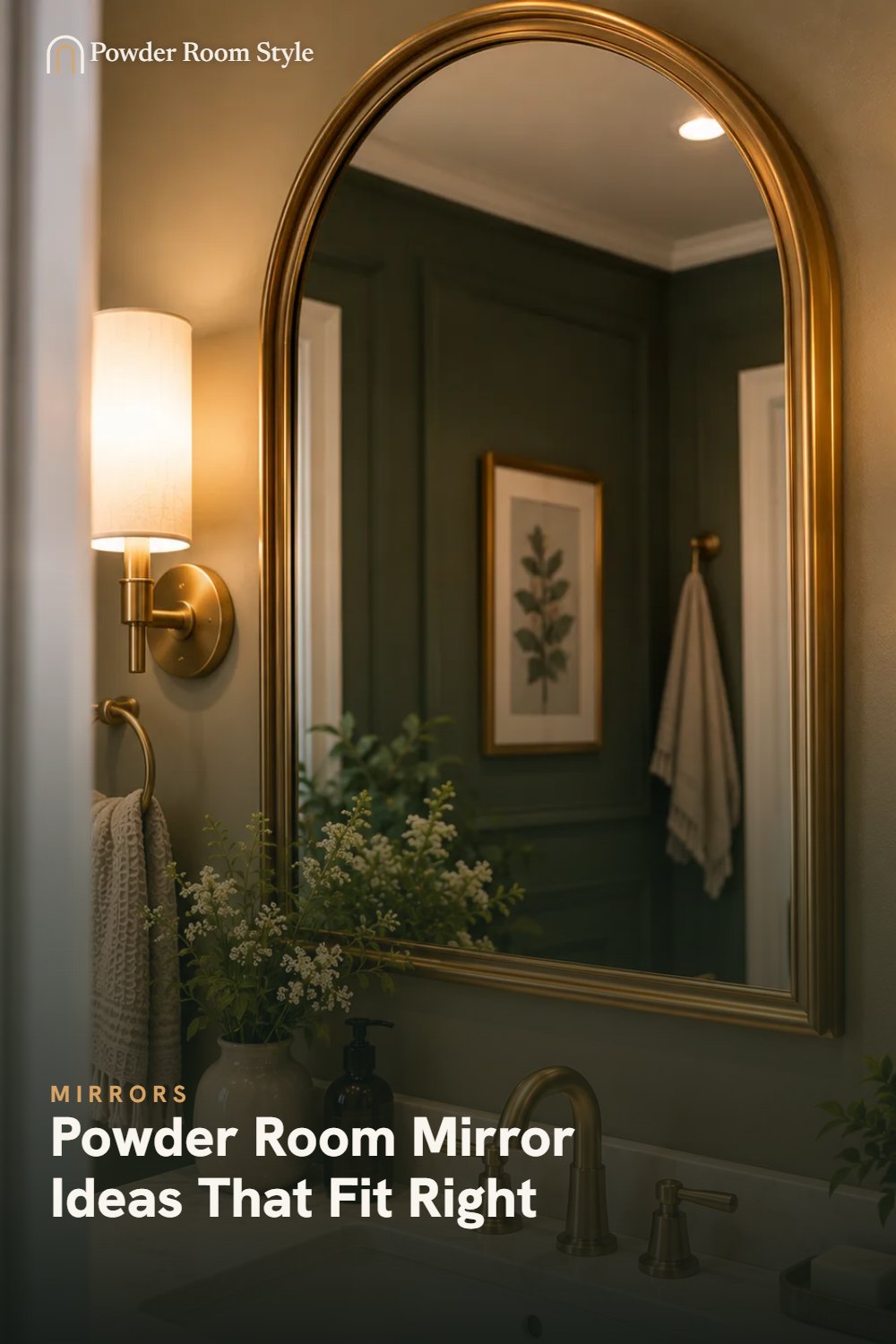
If your powder room is already curve-heavy — a pedestal sink, an arched doorway — an arched or oversized mirror can balance it better than another round shape would.
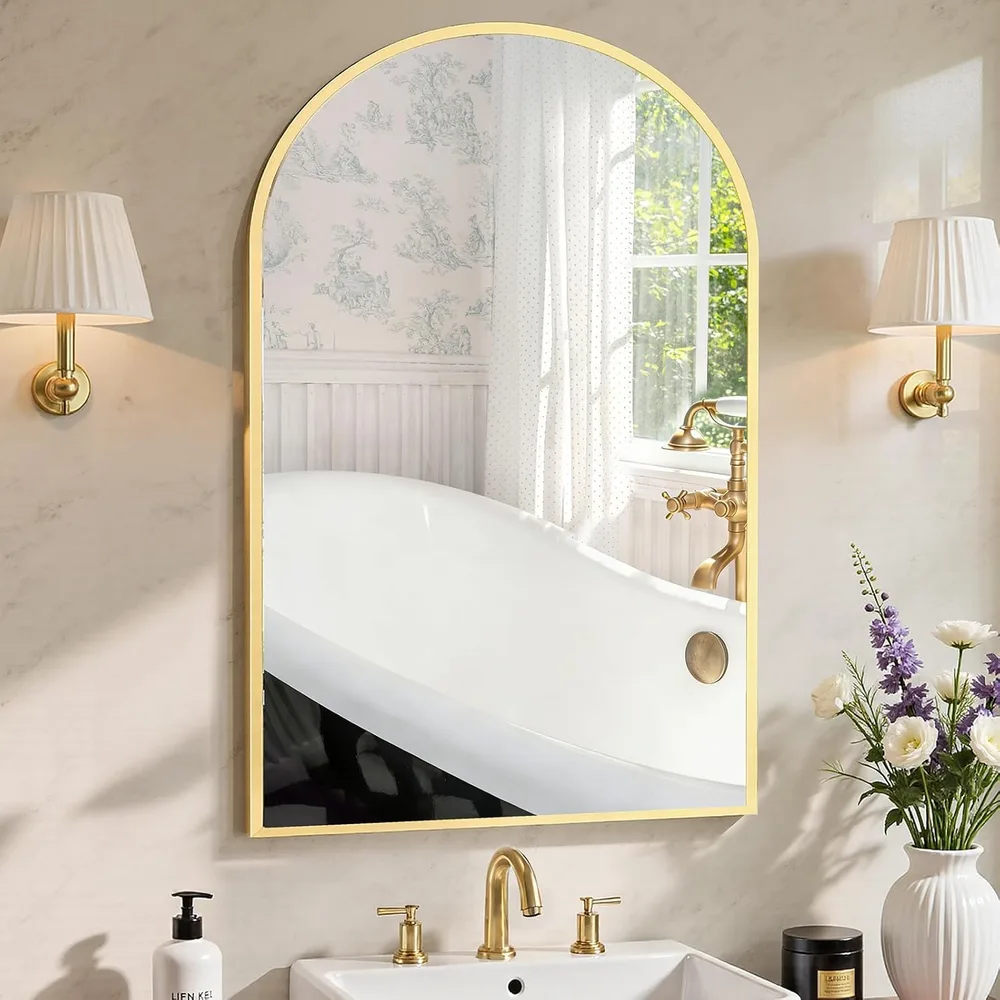
$100–$200
The trade-off: I haven't tested this one myself. At 20 inches wide, it's oversized for a narrow single-sink vanity under about 26 inches — check your vanity width before ordering, using the sizing guidance below.
The accessible way into the arched-mirror look without a designer price tag. If you want to spend more, Anthropologie and CB2 both carry arched and curved vanity mirrors in the $200–$500+ range with more distinctive framing.
See arched mirror optionsAn LED mirror is the one option here that can genuinely replace a separate light fixture, not just complement one.
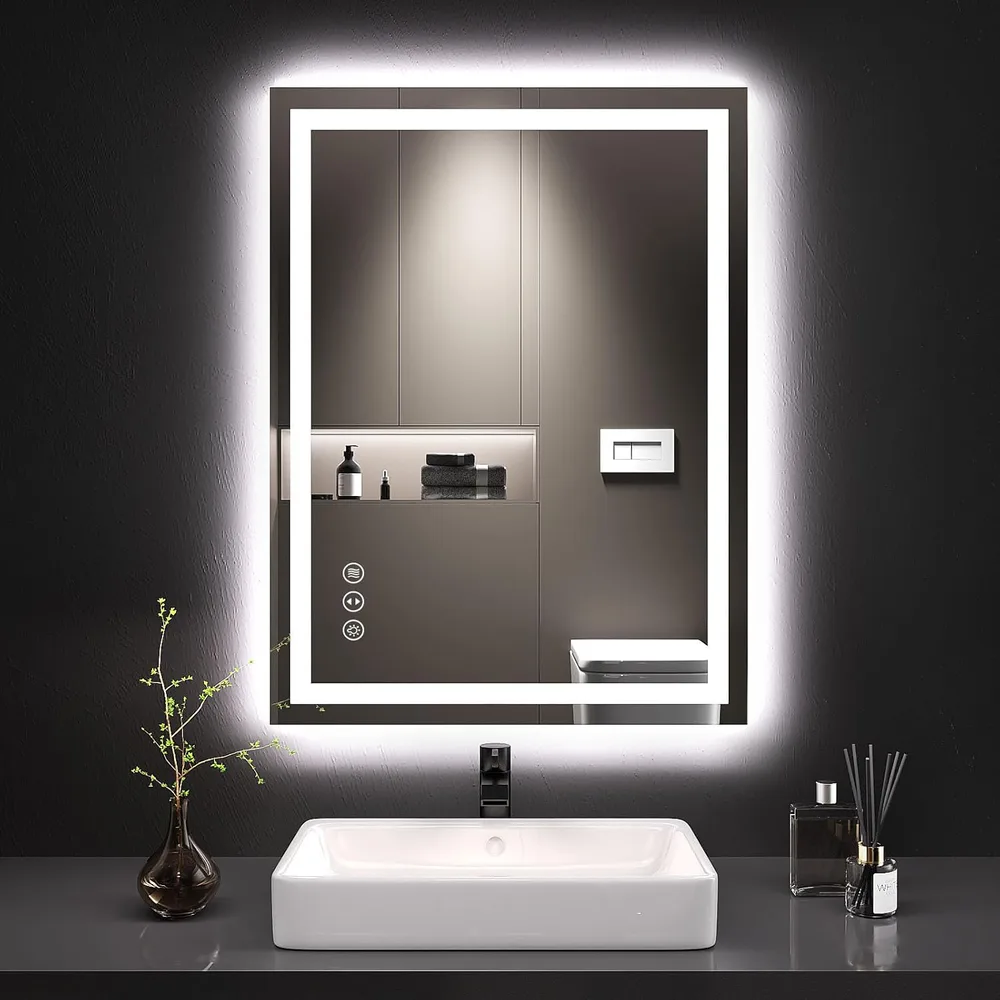
$150–$300
The trade-off: I haven't installed one myself. Plug-in versions are a straightforward DIY swap; hardwired versions need an electrician, which changes the real cost — check which version you're buying before you order.
Worth it specifically if you're also replacing your lighting anyway. Skip it if your current sconces or fixture are fine — you'd be paying for light you don't need.
See LED mirror optionsThis is the part that actually would have saved my 2014 mirror. Two rules, and they matter more than the shape you pick:
For height: mount the bottom edge 5–10 inches above the countertop or backsplash, then check that the mirror’s center lands around eye level for your household — typically 57–65 inches from the floor. If your vanity runs taller or shorter than the standard 32–36 inches, the eye-level number should win over the gap-above-the-counter number. For an arched or oval mirror, center the lowest point of the curve above the faucet rather than centering the whole shape on the wall — it reads more intentional.
I’d have measured the vanity width before buying, instead of eyeballing “small mirror for a small room” logic. A powder room being small is exactly why the mirror needs to earn its spot on the wall — undersized reads as an afterthought, not as restraint.
For a round mirror, aim for at least 80% of the vanity's width, up to the full width. For a rectangular or arched mirror, aim for 75–98% of the vanity width — leave at least an inch or two of wall showing on each side. On a standard 24-inch vanity, that's roughly a 19–24 inch round mirror, or a 18–23 inch wide rectangular one. My first mirror in 2014 was closer to 14 inches on a 24-inch vanity — technically centered, but it read as undersized the moment I actually looked at it next to the sink.
5 to 10 inches above the countertop or backsplash is the standard range. Beyond that, center the mirror at your household's average eye level, roughly 57–65 inches from the floor — that number matters more than the gap-above-the-counter number if your vanity is unusually tall or short. For an arched or oval mirror, center the lowest point of the curve above the faucet, not the geometric center of the whole shape.
Round softens a room that's already full of straight lines — vanity edges, door frames, tile grout lines — which is why I went round both times. Rectangular or arched makes more sense if your powder room is already curve-heavy (a pedestal sink, an arched doorway) and needs something to balance it. Neither is objectively better; it's about what the rest of the room is already doing.
If you're also planning to add or replace lighting, an LED mirror can genuinely replace a separate light fixture — a decent one runs $150–$800, which is comparable to buying a plain mirror plus a vanity light separately. If your existing lighting is fine, a plug-in LED mirror is an easy add; a hardwired one needs an electrician, so factor that into the cost before you commit. I haven't installed one myself, so take this as researched guidance, not a tested recommendation.
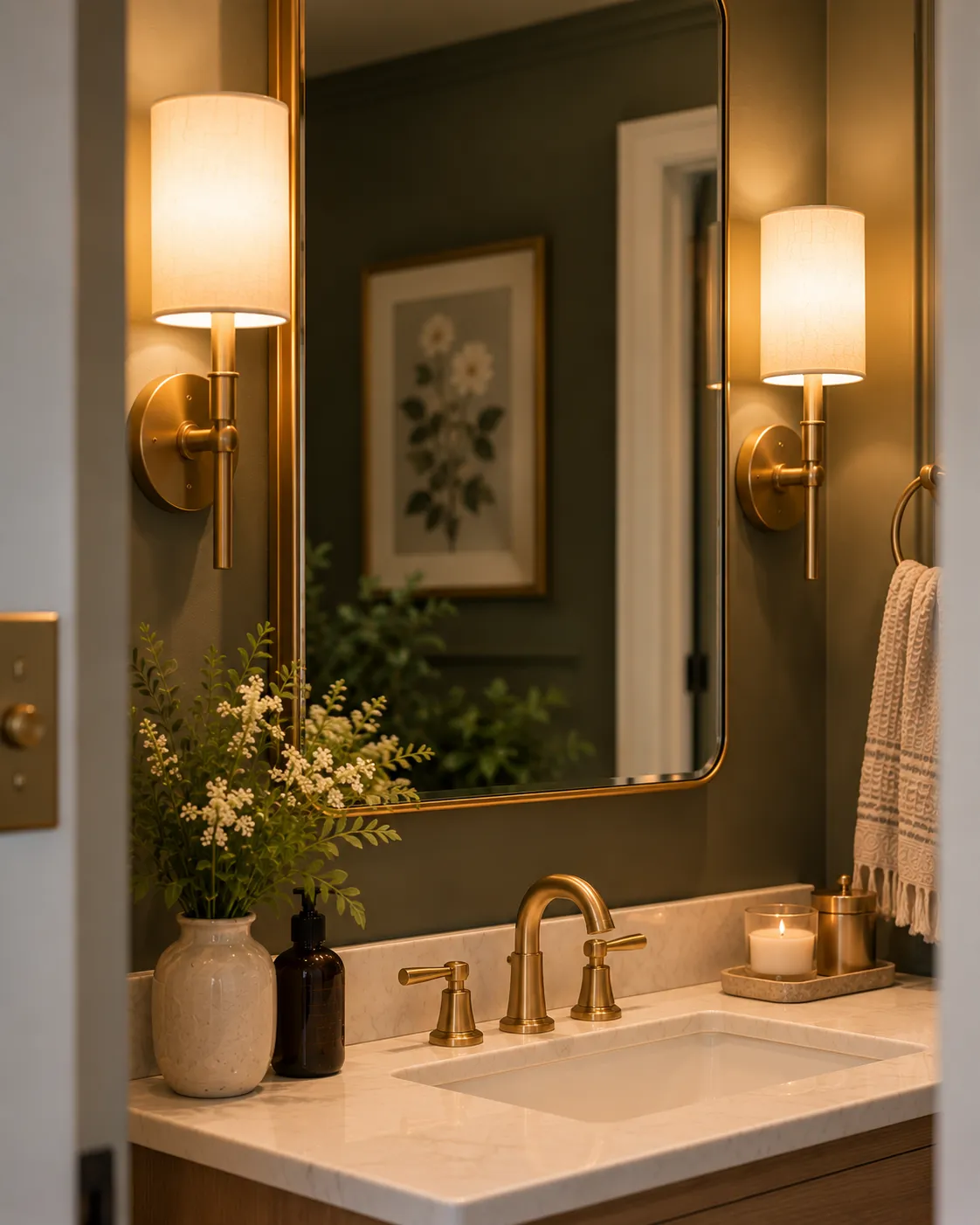
Framed gives you a style lever — brass, black, wood — that a plain frameless mirror doesn't. Frameless (or a simple beveled-edge mirror) reads more minimal and is usually the cheaper option, but in a small, guest-facing room, I think the frame is worth the extra cost more often than not; it's doing more visual work per square foot than in a bigger room.
One email, every other Sunday
Plus one small-space fix each issue. No affiliate dumps, no 40-item roundups.
No spam. Unsubscribe in one click.