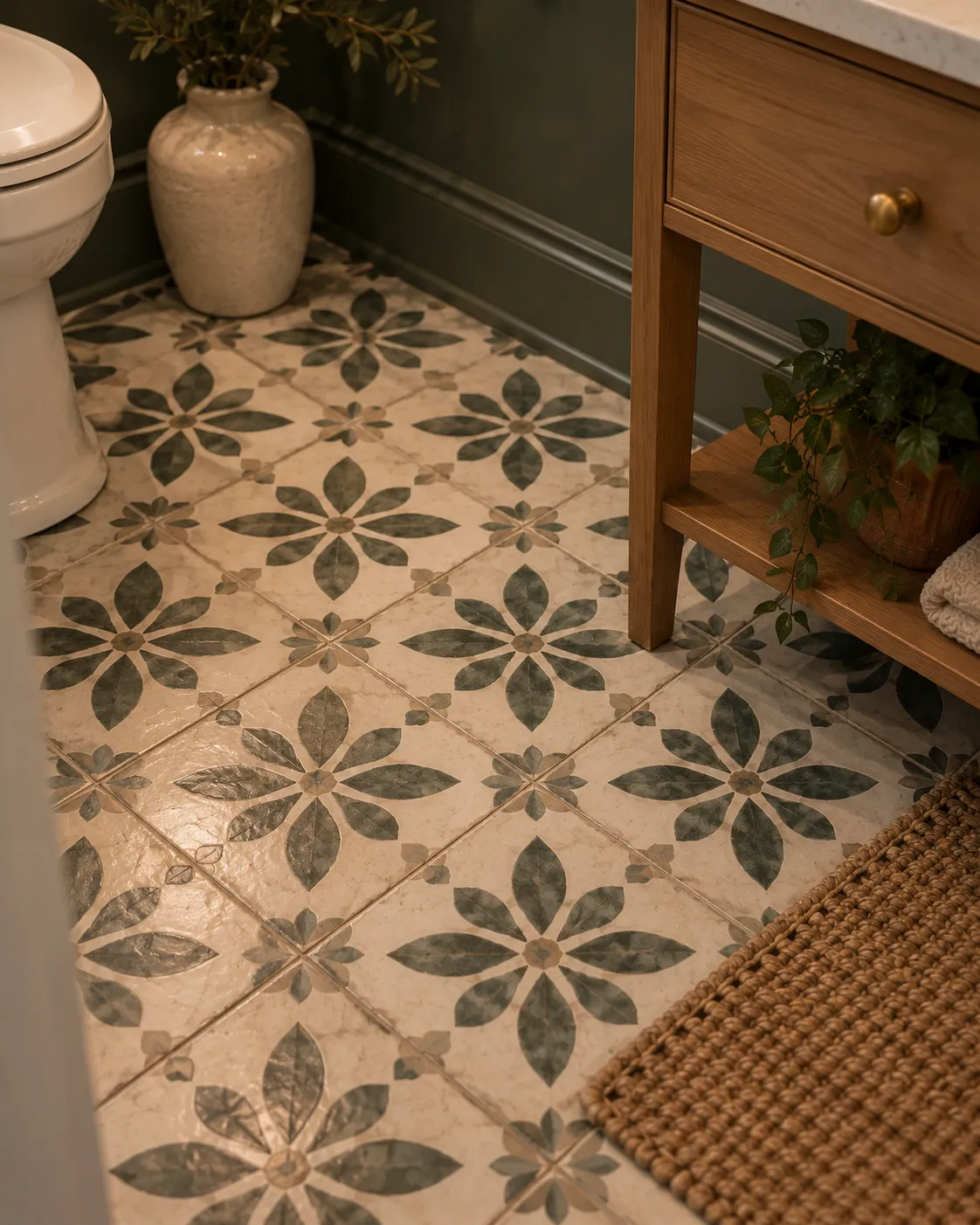
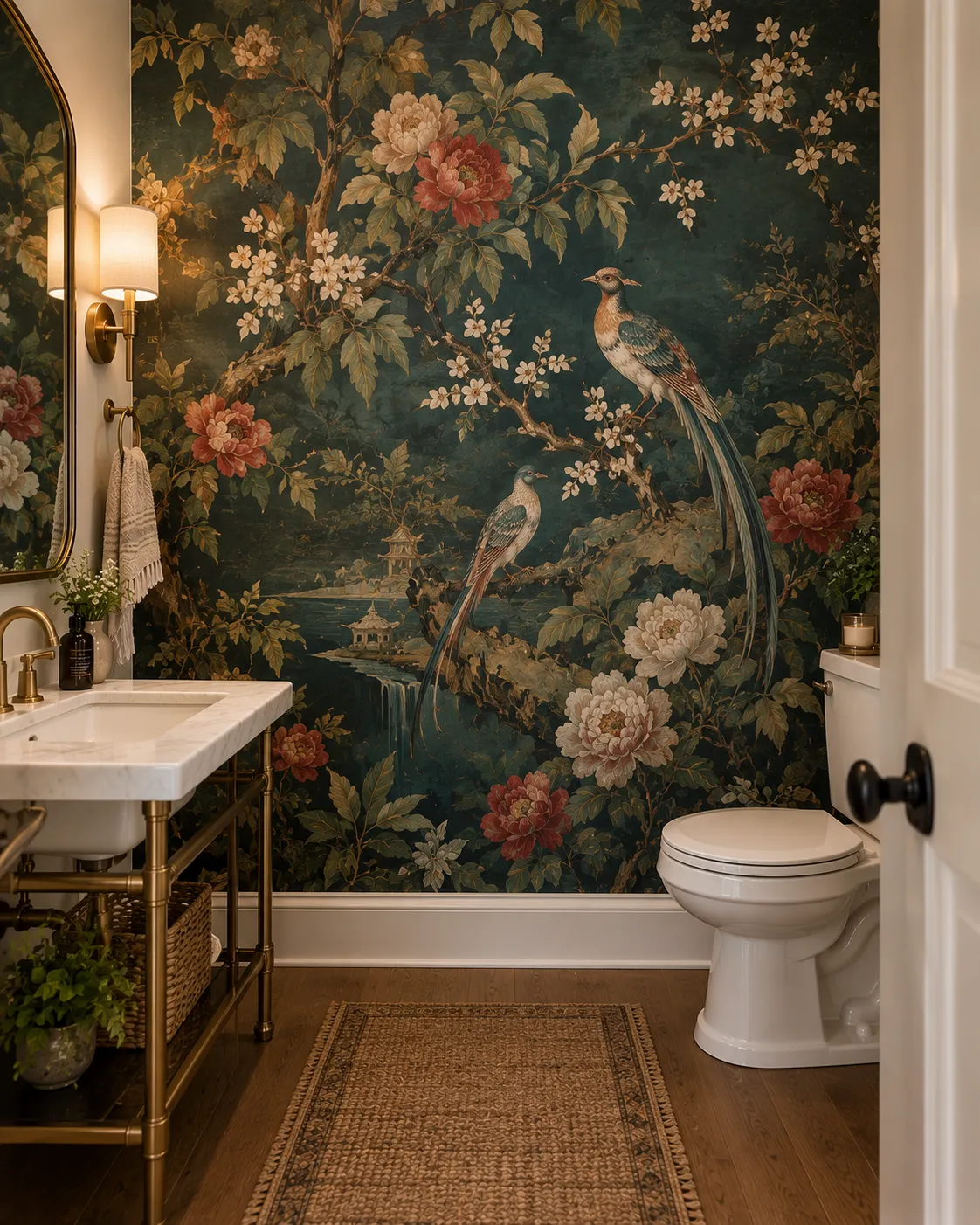
Powder Room Wall Decor, Art, Signs, and Rugs

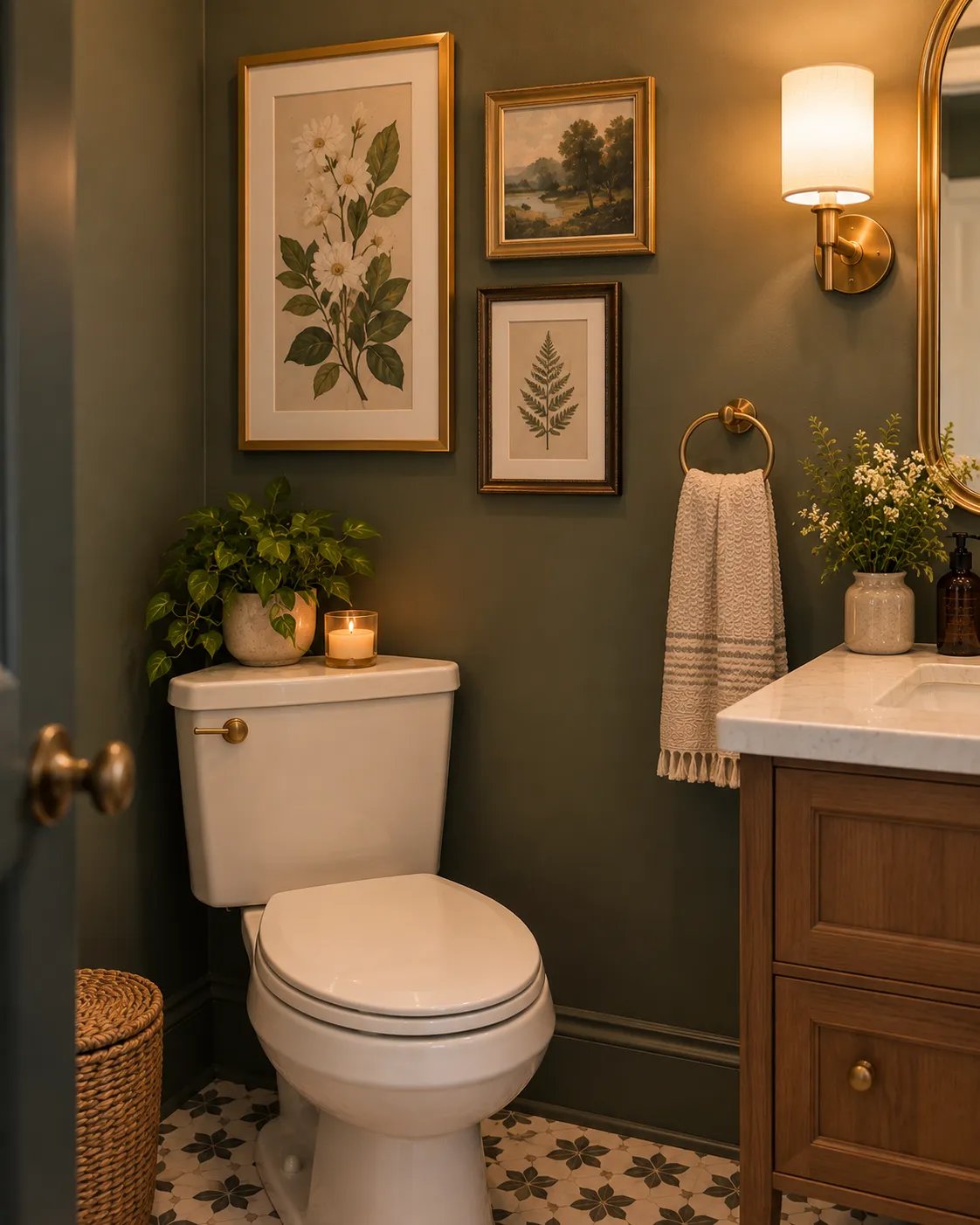
The finishing touches are what separate a powder room that’s “done” from one that just has the big renovation decisions made — and this is the category most people either skip entirely or get wrong in a way that’s genuinely avoidable.
If your powder room has tile running partway up the wall — wainscot height is common — hanging art there needs different handling than drywall. For anything light, a real adhesive picture-hanging hook (not just double-sided tape) skips drilling entirely; clean the tile with rubbing alcohol first so the adhesive bonds properly. If you do need to drill, use a carbide-tipped masonry bit and start slowly so it doesn’t skate across the glaze and crack it. The trick most decor content never mentions: aim for the grout line instead of the tile itself — grout drills easily and carries zero cracking risk.
Glass or acrylic fronts hold up better than cheap plastic, which yellows over time in a humid room. Keep anything genuinely paper-based (not behind real glass) away from the wall directly behind the sink, where humidity concentrates the most even without a shower running.
A non-slip backing isn’t optional — a hard floor plus a wet-handed guest is exactly the scenario it exists to prevent. Beyond safety, a washable, low-pile rug you can actually launder regularly is the safer long-term choice over a thick, plush one that holds moisture and takes longer to dry between uses. The rug itself isn’t the mold risk; staying damp because of poor airflow is.
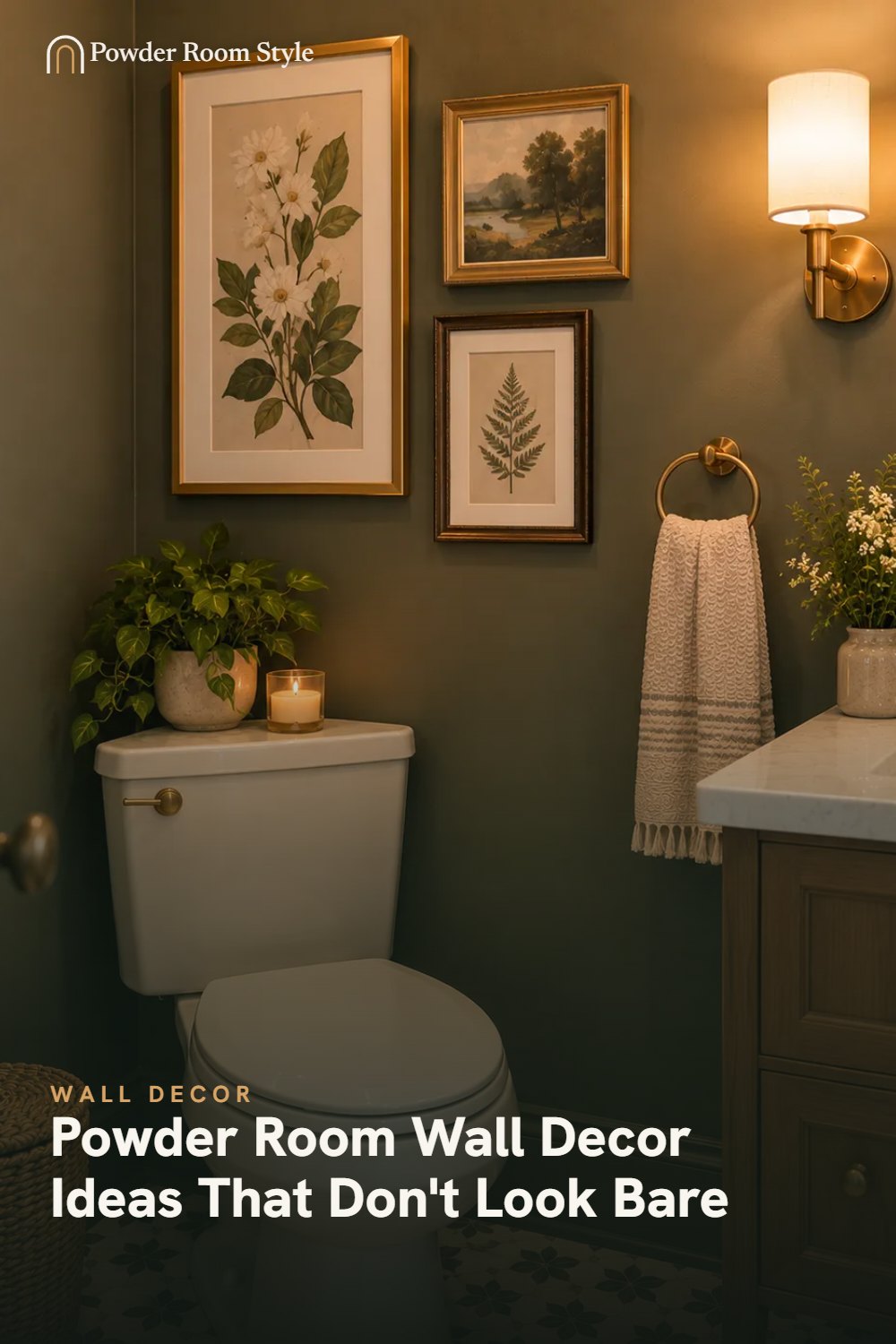
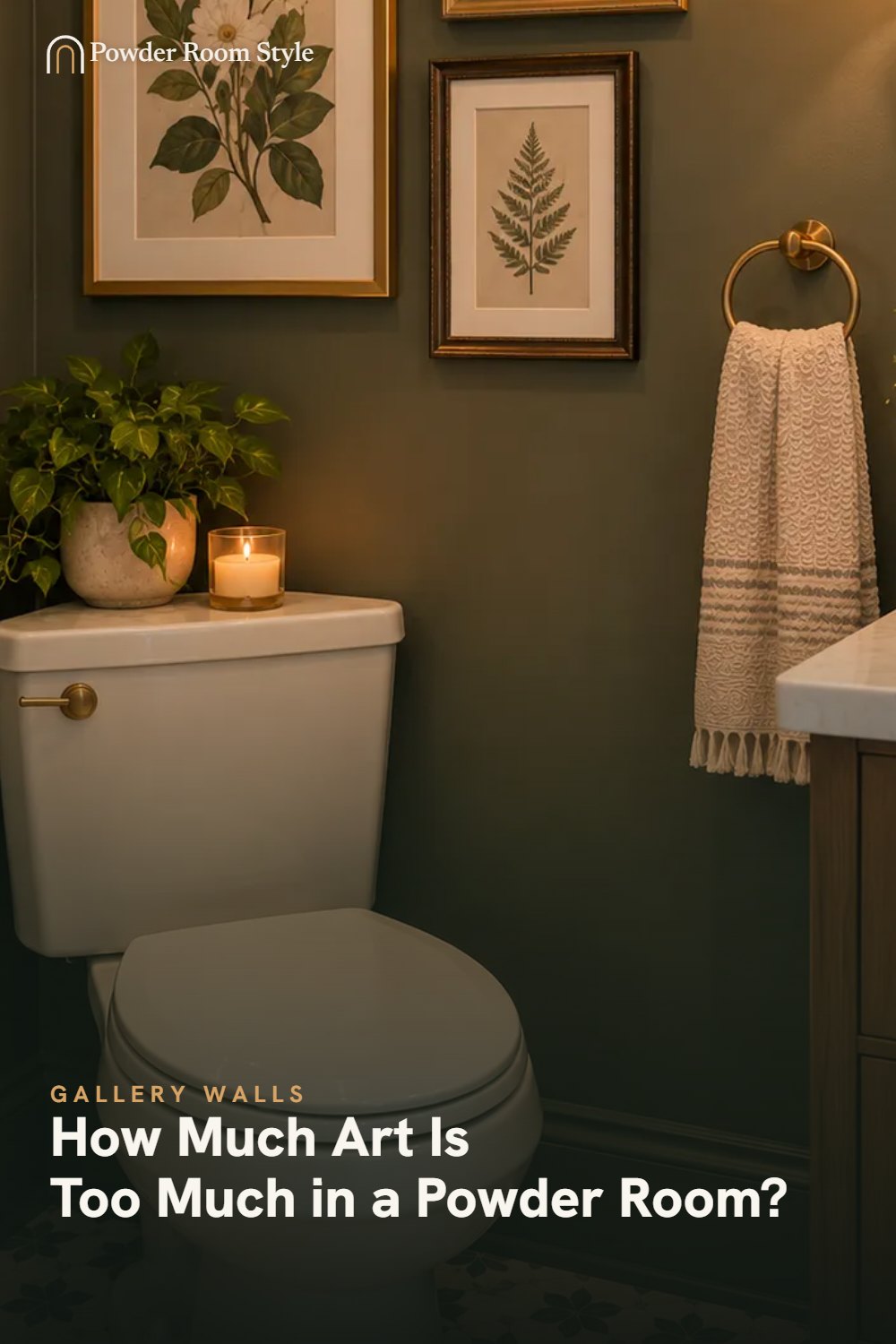
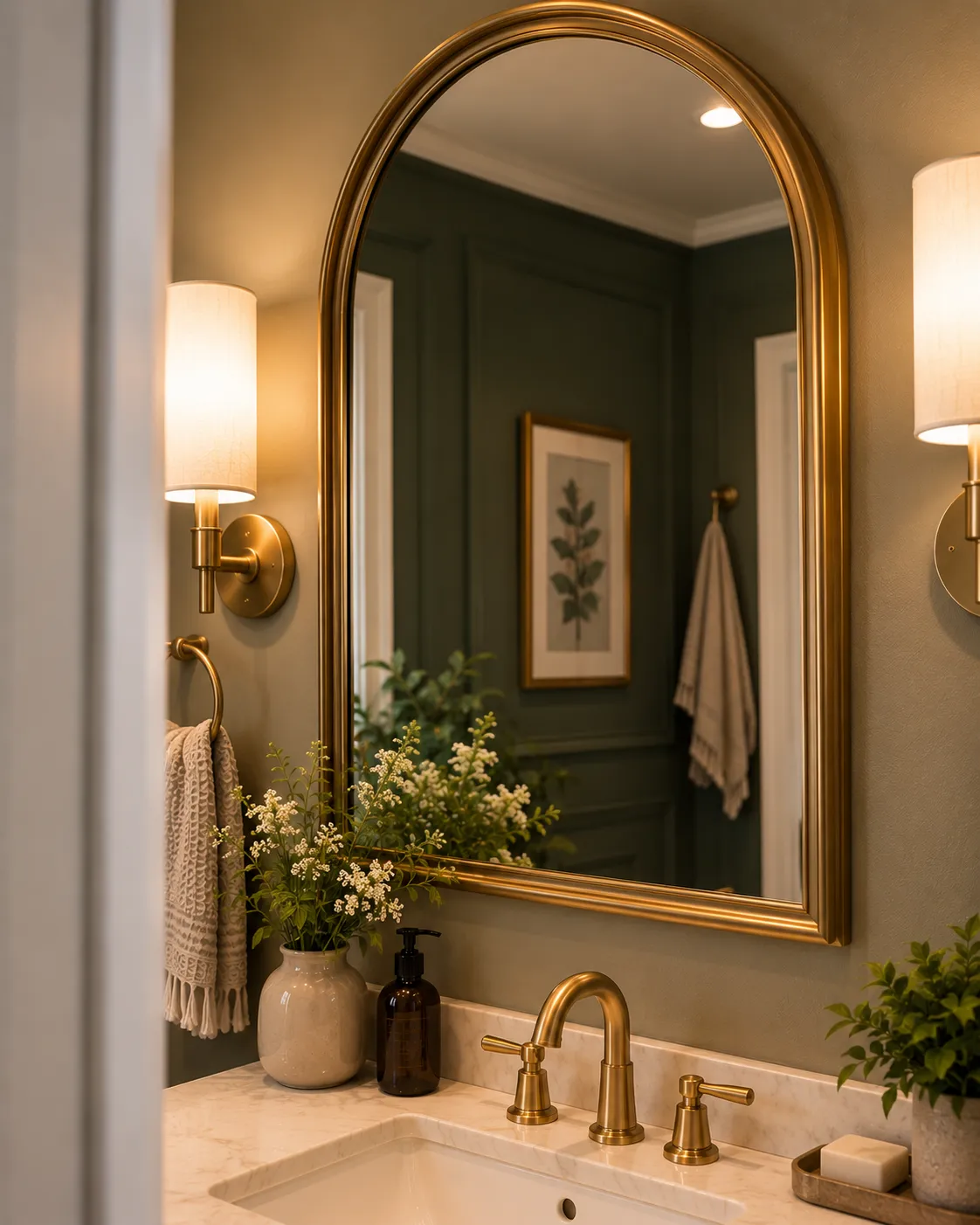
As a starting rule, art hung above a vanity should span roughly two-thirds to three-quarters of the vanity or mirror’s width below it. Narrower than that and it reads like an afterthought stuck on an empty wall; wider than that and it starts competing with the mirror instead of supporting it.
For anything light, a proper adhesive picture-hanging hook (not just tape) skips drilling entirely — clean the tile with rubbing alcohol first so the adhesive actually bonds. If you do need to drill, use a carbide-tipped masonry bit and start slowly so it doesn't skate across the glaze and chip it. The trick almost nobody mentions: target the grout line instead of the tile itself. Grout is much easier to drill into and carries no cracking risk at all.
It can, over time, mostly through the glass fogging repeatedly and the frame or matting absorbing moisture. Choose frames with real glass or acrylic (not a cheap plastic that yellows) and keep anything paper-based away from the wall directly behind the sink, where humidity concentrates most.
It's safe as long as it can actually dry between uses — a rug that stays damp because of poor airflow is the real mold risk, not the rug itself. A washable, low-pile rug that you can launder regularly is the safer choice over a thick, plush one that holds moisture longer.
Yes, without exception — a hard floor plus a wet-handed guest is exactly the situation a non-slip backing exists for. Don't skip this for the sake of a rug's look; it's a real safety detail, not an optional nicety.
As a starting rule, art (or a grouping of pieces) should span roughly two-thirds to three-quarters of the vanity or mirror's width below it — noticeably narrower than the vanity and it reads like an afterthought, noticeably wider and it competes with the mirror instead of supporting it.
About the author
Michael P. Reed has spent over a decade obsessively renovating, testing, and rethinking powder rooms — starting with his own and eventually everyone else’s. He’s not a licensed interior designer or contractor; he’s a hands-on homeowner who’s repainted the same wall four times to get it right and written down what he learned. Based outside Columbus, Ohio.
More about MichaelOne email, every other Sunday
Plus one small-space fix each issue. No affiliate dumps, no 40-item roundups.
No spam. Unsubscribe in one click.