Peel-and-Stick Wallpaper for a Powder Room: Is It Actually Worth It?

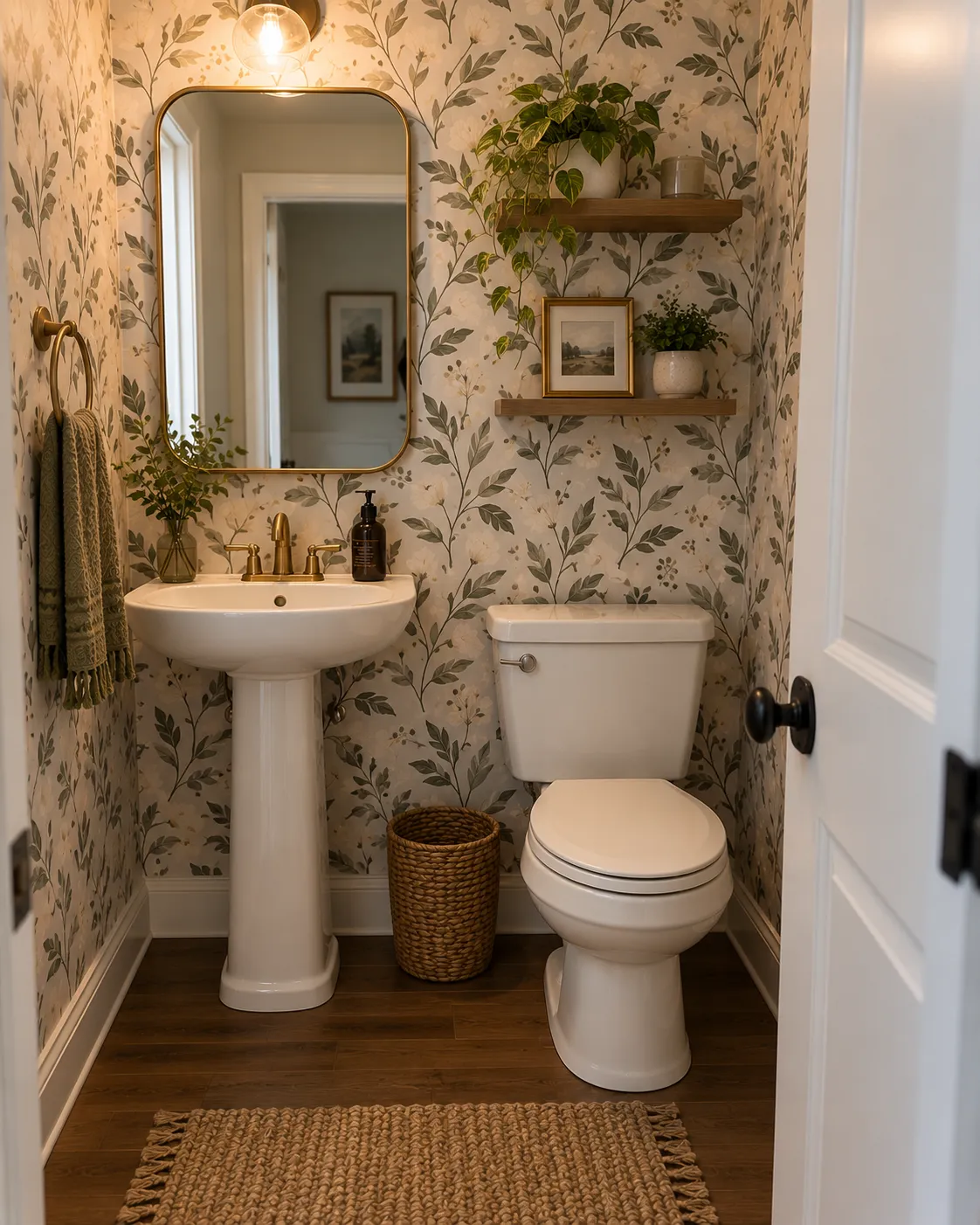
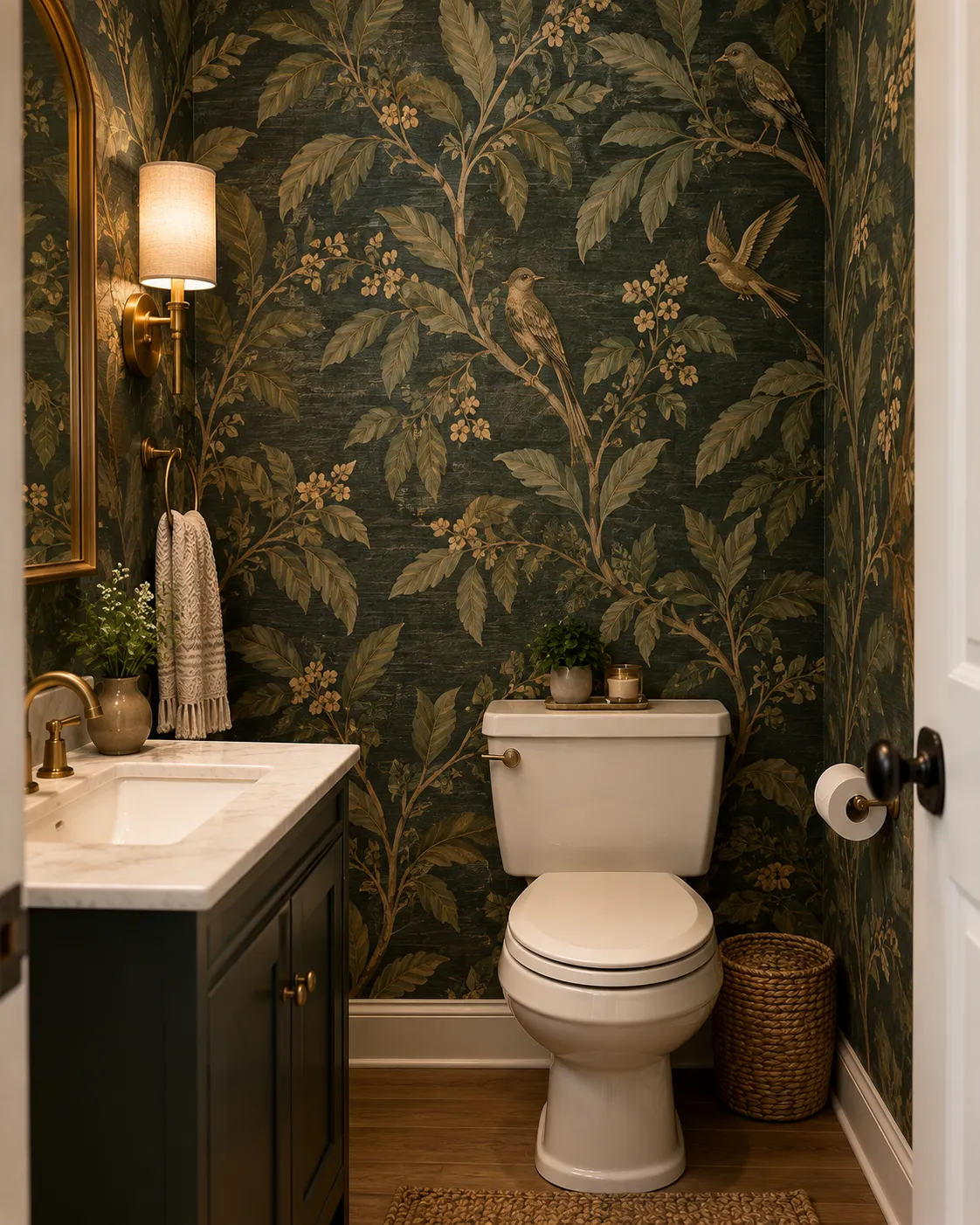
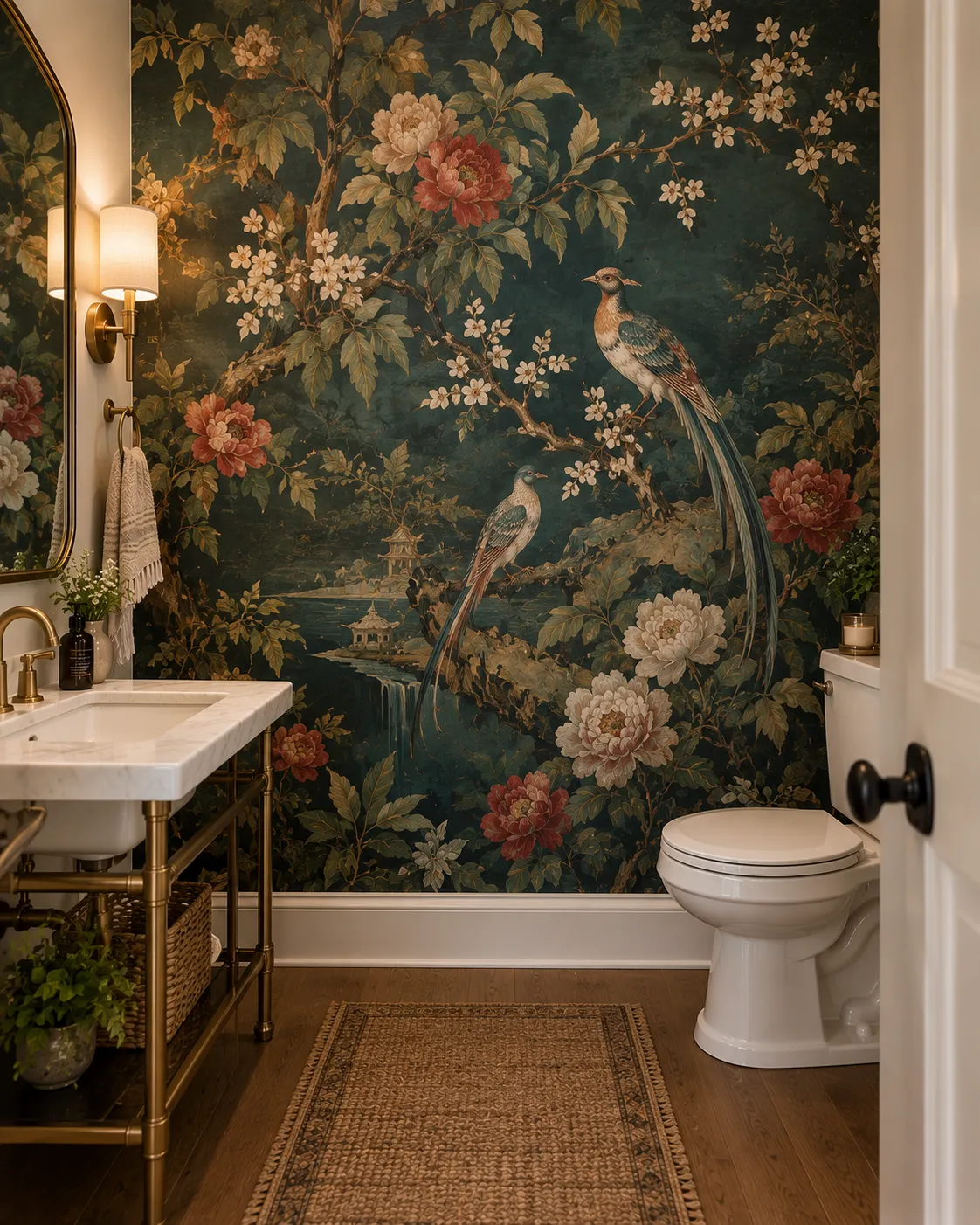
I put a botanical peel-and-stick pattern in my daughter Emma’s first apartment half bath — a rental, done with nothing that couldn’t come back out at move-out. It’s been up for a few years now, which is long enough to actually answer the “does this hold up” question instead of just guessing.
How it’s actually held up
Genuinely well, with one honest exception: the corner nearest the sink started lifting slightly at the seam after about two years — not a failure, just enough that it needed re-pressing with a bit of extra adhesive. Everywhere else in the room, it still looks like the day we put it up. That pattern matches what the research backs up: ventilation matters more to peel-and-stick’s lifespan than the specific brand or price point does, and the area right around a sink is where humidity concentrates the most in a room that otherwise stays fairly dry.
What it actually trades away
It looks and feels like vinyl up close — it’s not trying to pass for real wallpaper, and it doesn’t. What you get in exchange is a genuinely reversible install: no paste, no steaming it off later, no risk of taking drywall paper with it the way old traditional wallpaper sometimes does. For a rental, that trade is an easy yes. For a house you’re not leaving, I’d point you to the main wallpaper guide instead, where the texture and depth of real paper (or real grasscloth, which is what I ultimately chose for my own place) is worth the lost reversibility.
Removal: mostly fine, one real caveat
On fresh, properly cured paint, it comes off clean. On an older paint job, or one that wasn’t fully cured before the wallpaper went up, it can pull a thin layer of paint away with it. Test a small, hidden patch — inside a cabinet, behind where a mirror will hang — before committing to a full wall if you’re not confident about the paint underneath.
Who this is actually right for
Renters, first apartments, and anyone testing whether they’ll actually like a bold pattern before committing to something less reversible. If you’re doing this in your own long-term home purely to save money rather than for the reversibility, I’d reconsider — the price gap between a good peel-and-stick roll and an entry-level real wallpaper isn’t as large as people assume, and real paper wins on look and longevity once reversibility isn’t the deciding factor.
Quick questions
How long does peel-and-stick wallpaper actually last in a bathroom?
Realistically 3–5 years with decent ventilation, closer to 2–4 without it. Ventilation matters more than which brand or price point you buy — a cheap roll in a well-ventilated powder room will outlast an expensive one in a room with no exhaust fan.
Will peel-and-stick wallpaper damage the walls when you remove it?
In my experience, mostly no — but "mostly" is doing real work in that sentence. On fresh, well-cured paint it comes off clean. On an older or lower-quality paint job, it can pull a thin layer of paint with it, especially if it's been up for years. Test a small hidden section before you commit to a whole wall if you're not sure about your paint's condition.
Is peel-and-stick as good as real wallpaper?
No, and it's not trying to be — that's not a knock on it. It looks and feels like vinyl up close, and it won't have the depth or texture of a real paper or grasscloth. What it trades for that is reversibility and an easy DIY install, which is exactly what makes it right for a rental or a renter.
Where does peel-and-stick wallpaper fail first in a bathroom?
The edges and seams, especially near a sink where hands and water get close to the wall repeatedly. That's exactly where I saw the first sign of lifting on Emma's apartment wallpaper, a couple of years in — not a full failure, just a corner that needed re-pressing.
Who should skip peel-and-stick and get real wallpaper instead?
Anyone in a house they plan to stay in long-term and want a genuinely premium look and feel — the difference in texture and depth is real, and I go through what actually held up for me in the main wallpaper guide. Peel-and-stick is the right call specifically when reversibility matters more than the top-tier look.