Powder Room Storage and Cabinet Ideas for Tight Spaces
Powder room storage and cabinet ideas: floating shelves, recessed niches, over-the-toilet shelving and cabinets for a room with almost no floor space.

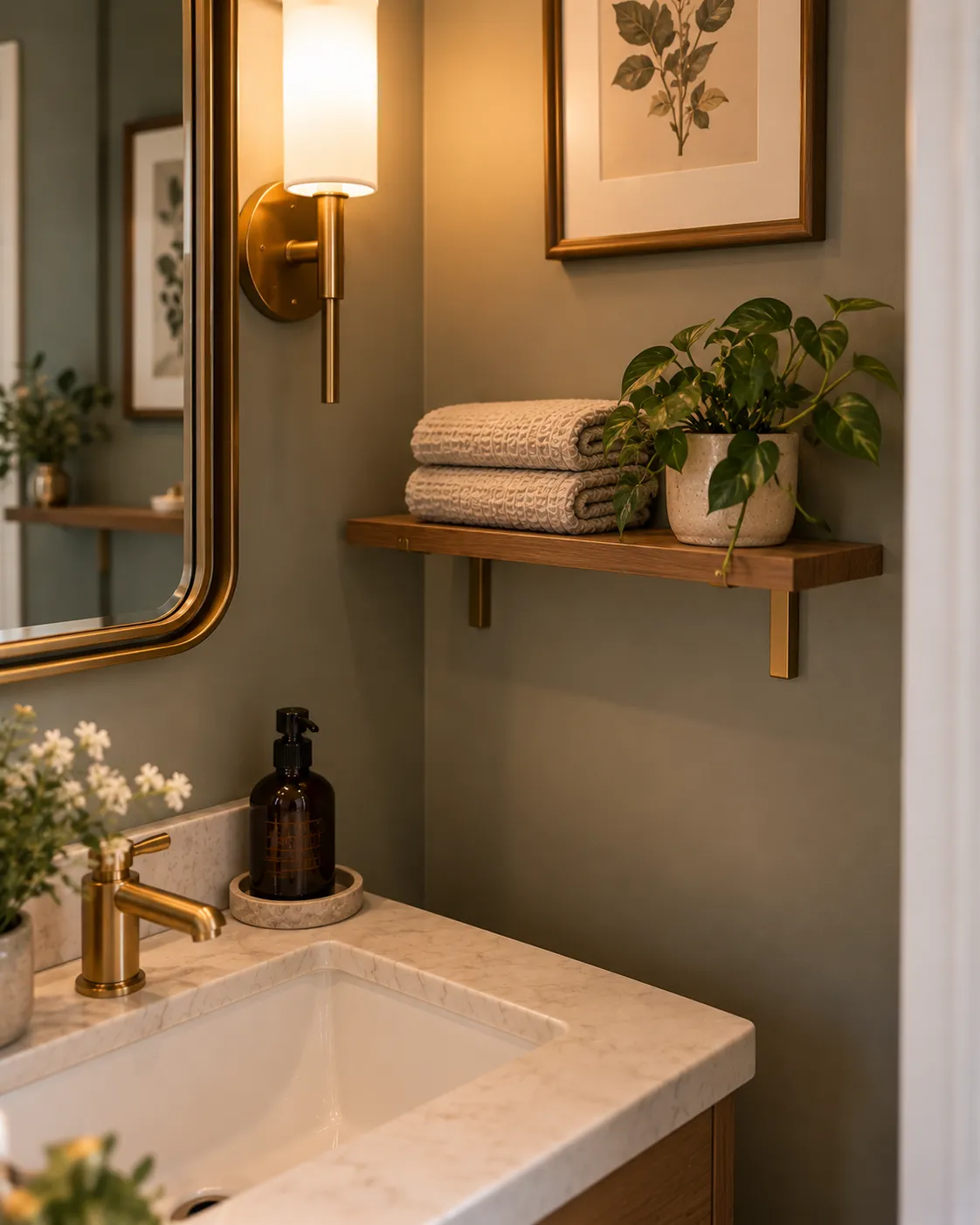
Powder room ideas, honest product picks and small-bath fixes, from someone who has redone his own three times.
Powder room storage and cabinet ideas: floating shelves, recessed niches, over-the-toilet shelving and cabinets for a room with almost no floor space.

Short answer: powder room storage works best on the wall: a floating shelf 6 to 8 inches deep, a recessed niche between the studs, or a shelf over the toilet with room to lift the tank lid. Use a cabinet with doors for daily-use items and keep open shelves for a folded towel and one plant.
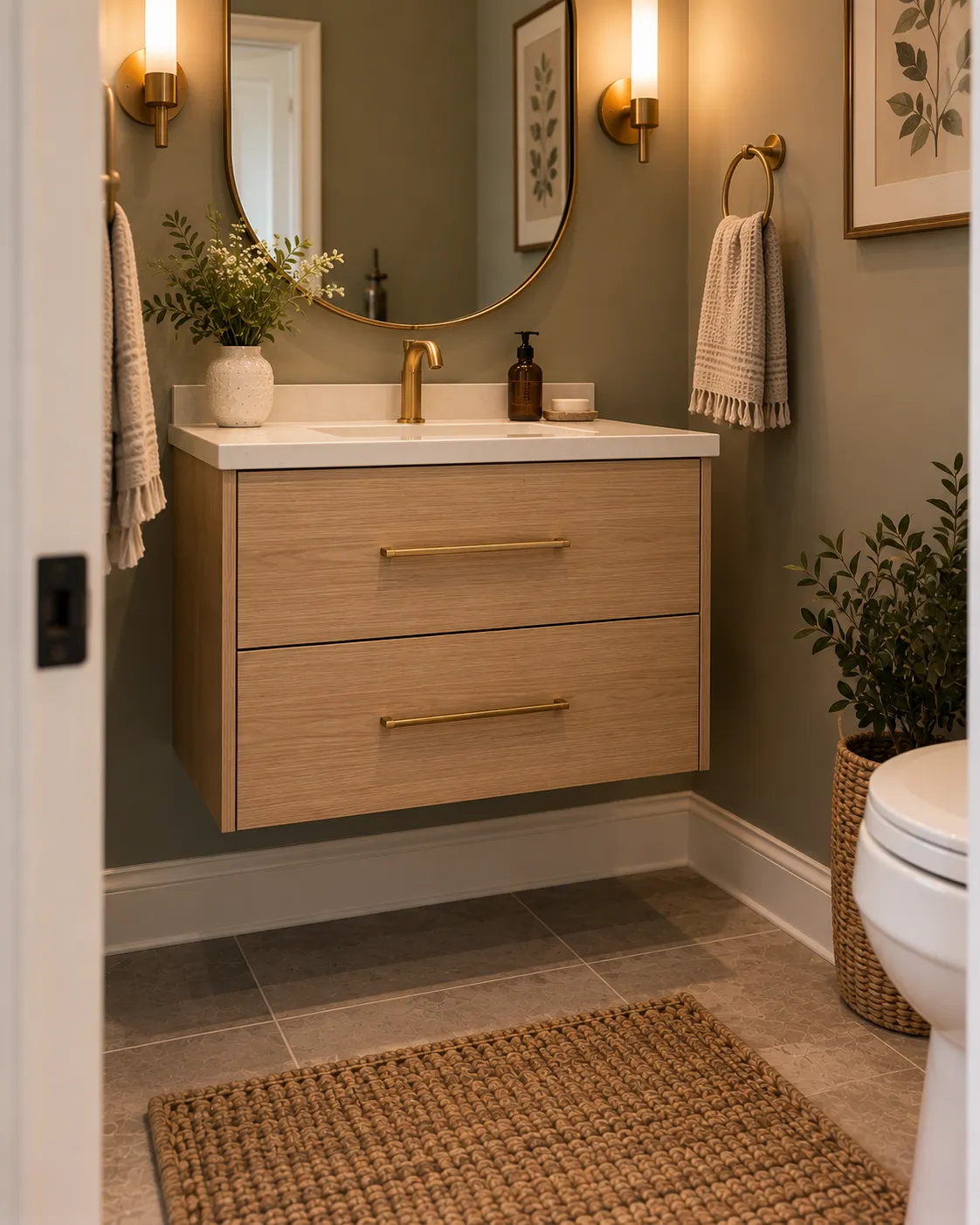
Storage in a powder room is almost always a vertical problem, not a floor-space problem — there’s rarely room for a floor cabinet, but there’s usually wall above the toilet or beside the sink going completely unused. For how storage fits into the rest of the room, see my powder room ideas guide. If the vanity is where most of it will live, my powder room vanities guide compares which styles hold the most.
A recessed medicine cabinet built into the wall gives you storage that doesn’t intrude on the room at all, but you’re cutting into the wall to do it — which risks hitting a stud or a plumbing line depending on where the sink’s supply lines run. Check both with a stud finder and a look at the rough-in before committing to this one, or hire it out rather than guess. A stud bay framed 16 inches on center leaves about 14½ inches clear (24 inches on center leaves about 22½), which is why recessed cabinets run around 14 inches wide. On an exterior wall, recessing removes insulation, so a surface-mounted cabinet is usually the better call.
Freestanding ladder shelves, an over-the-toilet étagère, and stackable under-sink bins all add real, usable storage without touching the wall — the option I’d point a renter toward, the same logic behind recommending peel-and-stick wallpaper over anything permanent for the exact same audience.
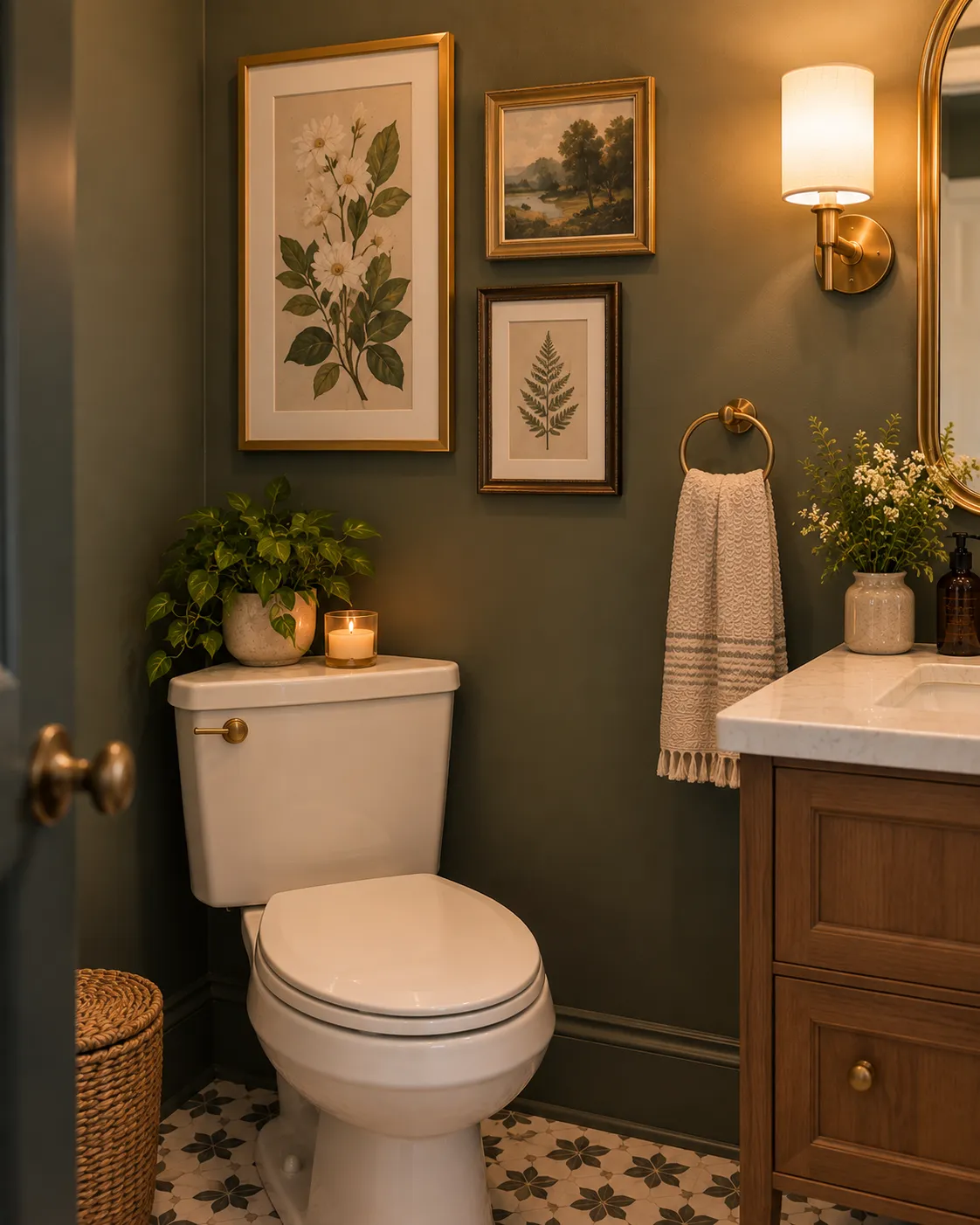
A shelf or cabinet over the toilet uses wall nobody else wants, but leave enough room between the tank and the first shelf to lift the lid off, or a simple flapper repair gets much harder. Keep it shallow, and check the shelf’s listed clearance and your local code before buying.
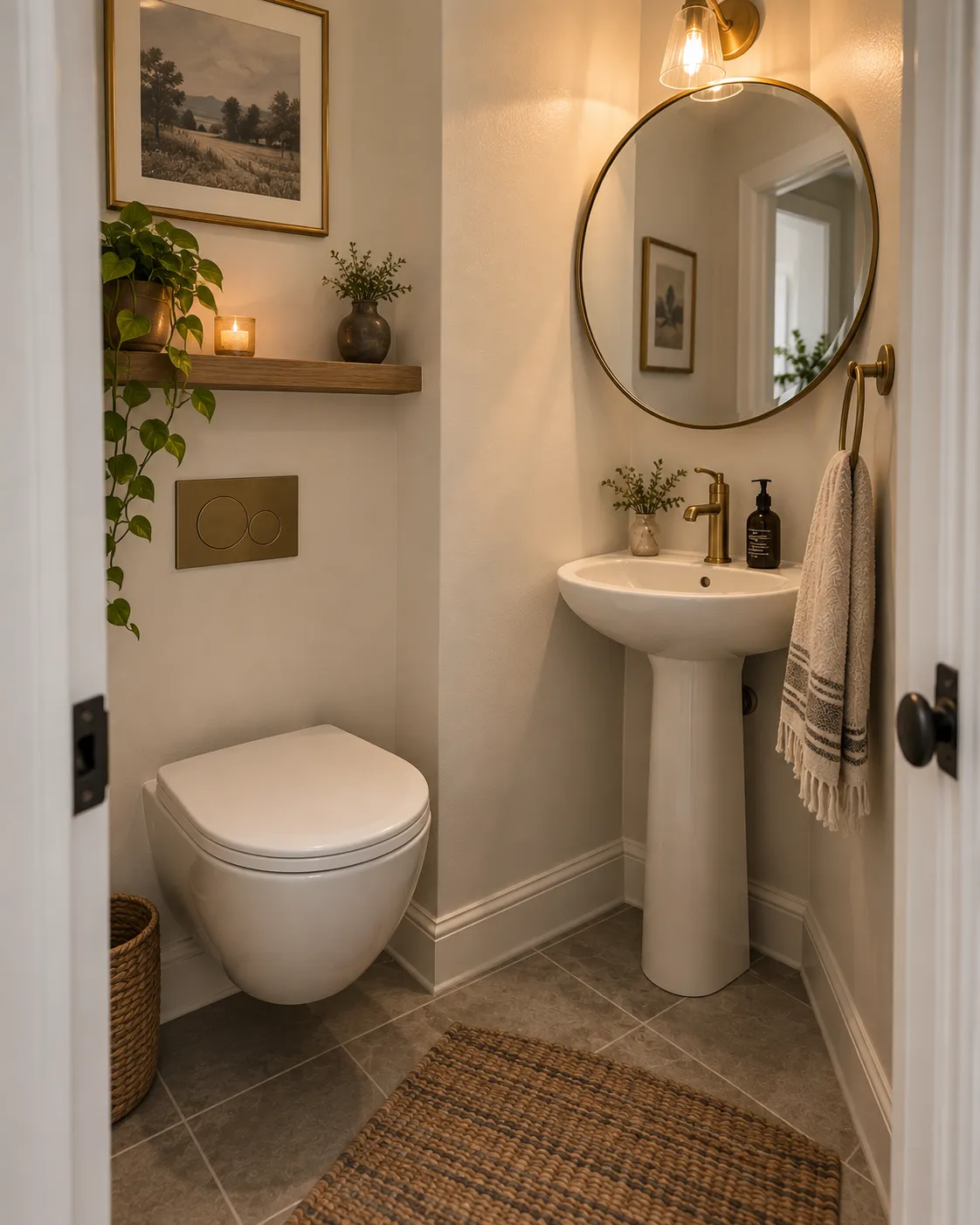
6 to 8 inches of projection from the wall is the sweet spot for a floating shelf in a genuinely small powder room — enough for real storage, not so much that people start bumping into it. Deeper than that in a tight footprint turns a shelf from useful into an obstacle.
Open shelving looks good specifically when it’s holding very few, intentional items — a folded guest towel, one plant, nothing that reads as overflow. If what you actually need to store is the daily-use stuff (extra toilet paper, cleaning supplies), a cabinet with doors hides that reality in a way open shelving never quite manages.
Harder than it looks in photos. You're cutting into the wall, which risks hitting a stud or a plumbing line depending on where the sink's supply lines run. Check for both with a stud finder and a look at your rough-in before committing, or hire this one out — it's not the place to guess.
Freestanding ladder shelves, over-the-toilet étagères, and stackable under-sink bins all add real storage with nothing more than setting furniture in place — the option I'd point a renter toward, the same way I'd point them toward peel-and-stick wallpaper over anything permanent.
6 to 8 inches is the range that gives genuinely usable storage without intruding on the room's walking space. Much deeper than that in a tight room, and the shelf becomes something people bump into rather than something they use.
Open shelving looks better with genuinely few, intentional items — a folded towel, one plant, nothing that looks like overflow storage. If you're using the space for actual daily-use clutter (extra toilet paper, cleaning supplies), a cabinet with doors hides that reality better than open shelving ever will.
Yes, as long as you leave enough room to lift the tank lid and keep the shelf shallow so nobody bumps it. Six to 8 inches deep is the range I would use, and a closed cabinet hides daily-use items better than open shelves.
About 14 inches in most walls. Studs framed 16 inches on center leave about 14 and a half inches clear, and 24 inches on center leaves about 22 and a half, so check which your wall has before choosing a cabinet.
About the author
Michael P. Reed has spent over a decade obsessively renovating, testing, and rethinking powder rooms — starting with his own and eventually everyone else’s. He’s not a licensed interior designer or contractor; he’s a hands-on homeowner who’s repainted the same wall four times to get it right and written down what he learned. Based outside Columbus, Ohio.
More about MichaelOne email, every other Sunday
No spam. Unsubscribe in one click.